MA-VR voor


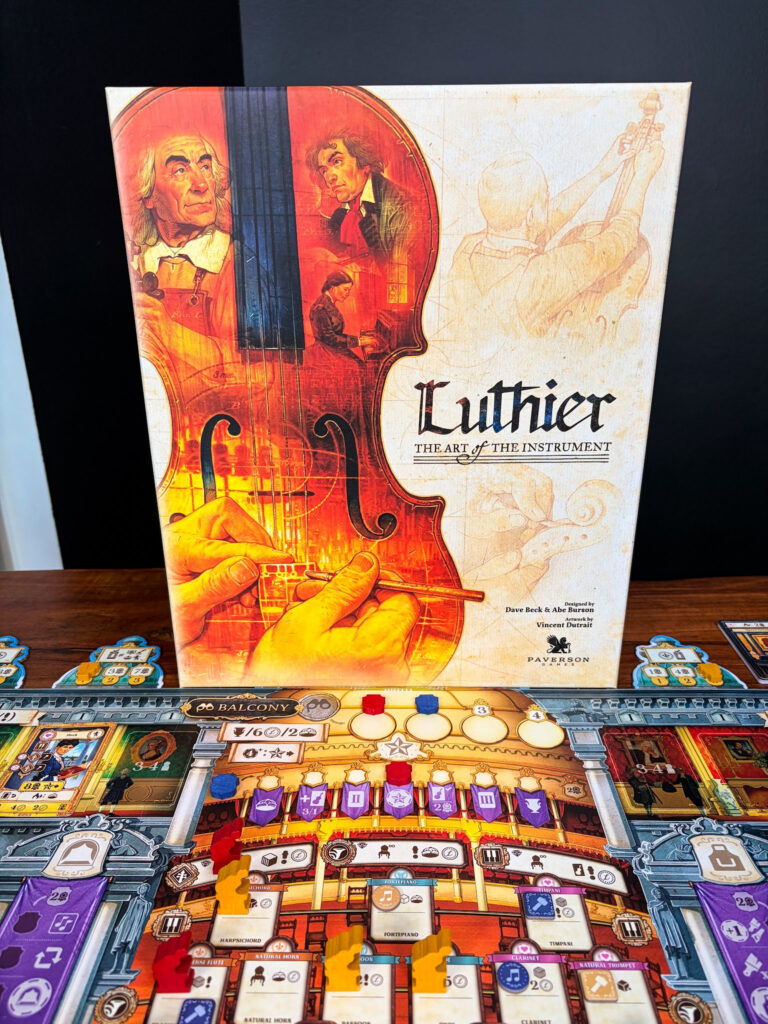
Luthier review
Paverson Games | 1–4 players| 12+ | 90–150 minutes
In this strategy game, published by Paverson Games, players are transported to the height of classical music in Western Europe. Each player represents a family of skilled artisans seeking prestige by fulfilling patrons’ requests for instruments, organizing performances, and completing necessary repairs.
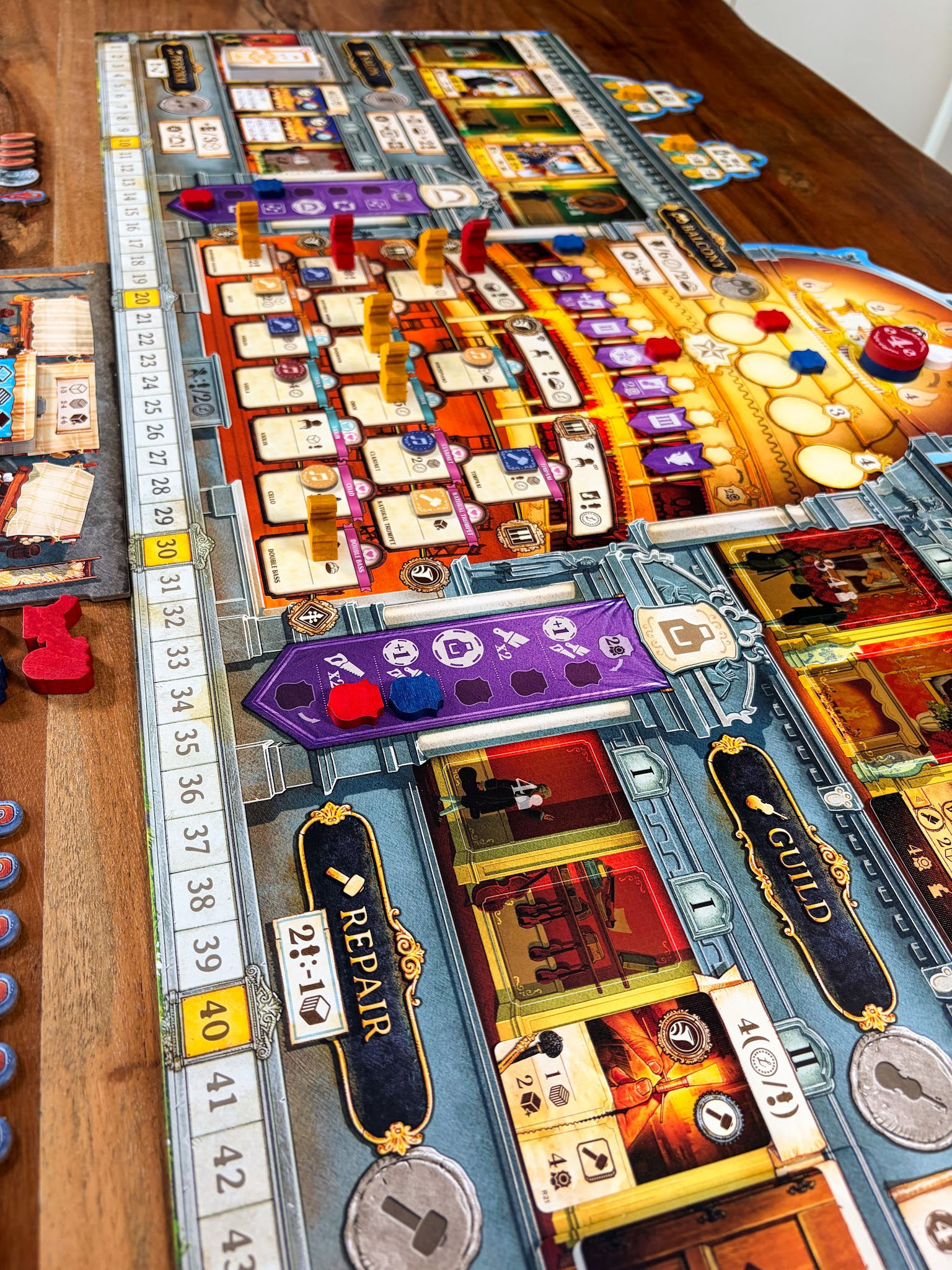
After setting up the main board and individual player boards, players take turns choosing locations to send their workers. These include the salon, where new patrons can be attracted to support your craft with gifts; the guild, where new instrument plans can be acquired; the perform area, where players demonstrate the value of their instruments; the repair workshop for fixing and refinishing instruments; and the balcony, where mingling with the elite grants recognition. Each player also has two personal locations on their board known as the workbench.
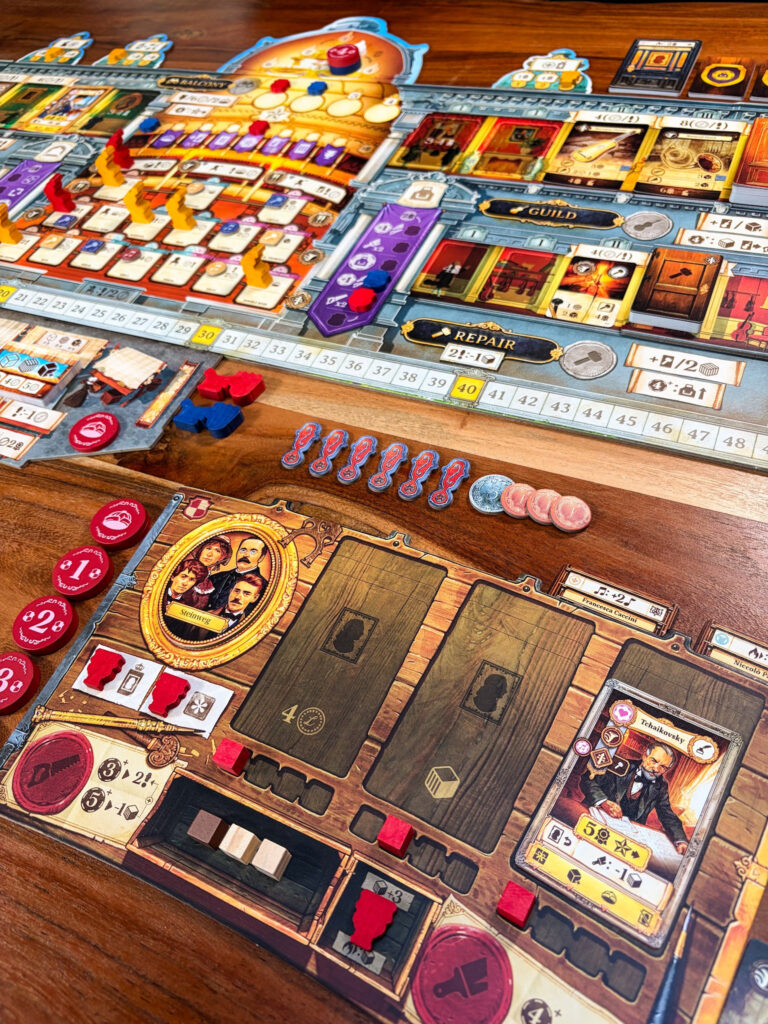
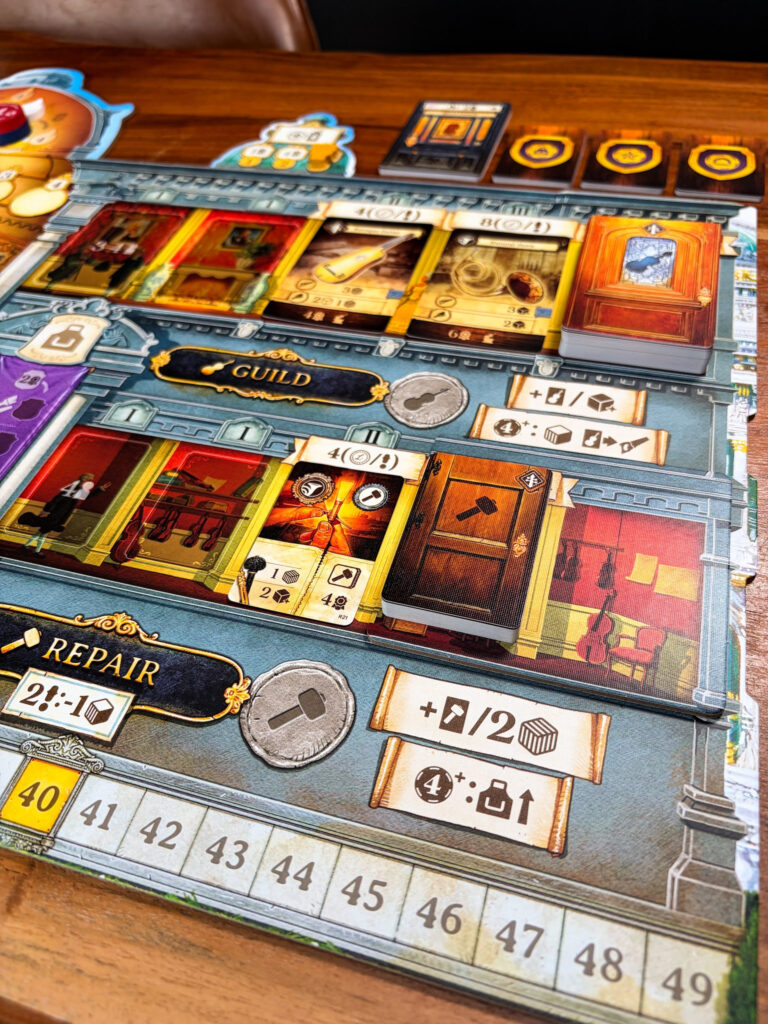
During the resolution phase, players activate locations one at a time and perform available actions in priority order determined by worker values. Players may also visit the market to buy or sell resources or recruit accomplices who enhance actions and improve priority. Throughout the game, players advance along three tracks: performance, craft, and reputation. Progressing on these tracks unlocks ongoing effects or one-time bonuses that support future actions and contribute to endgame scoring.
At the end of each round, turn order is updated, remaining worker chips are retrieved, the market is refreshed, and new patron, instrument, performance, and repair cards are revealed before advancing the round tracker. After six rounds, final scoring takes place. Players gain prestige from orchestra positions, completed patrons, finished instruments, personal objectives, specialty workers, and remaining resources. The player with the most prestige wins the game.
Impressions
This was one of the games that immediately caught my attention at Spiel Essen last year, and I was very eager to try it. I expected it to be among the most complex games in my collection, and it certainly lived up to that expectation. Despite its depth, the rulebook and the included rehearsal mode, which guides players through their first game, are clear and approachable even after only watching a few tutorials beforehand.
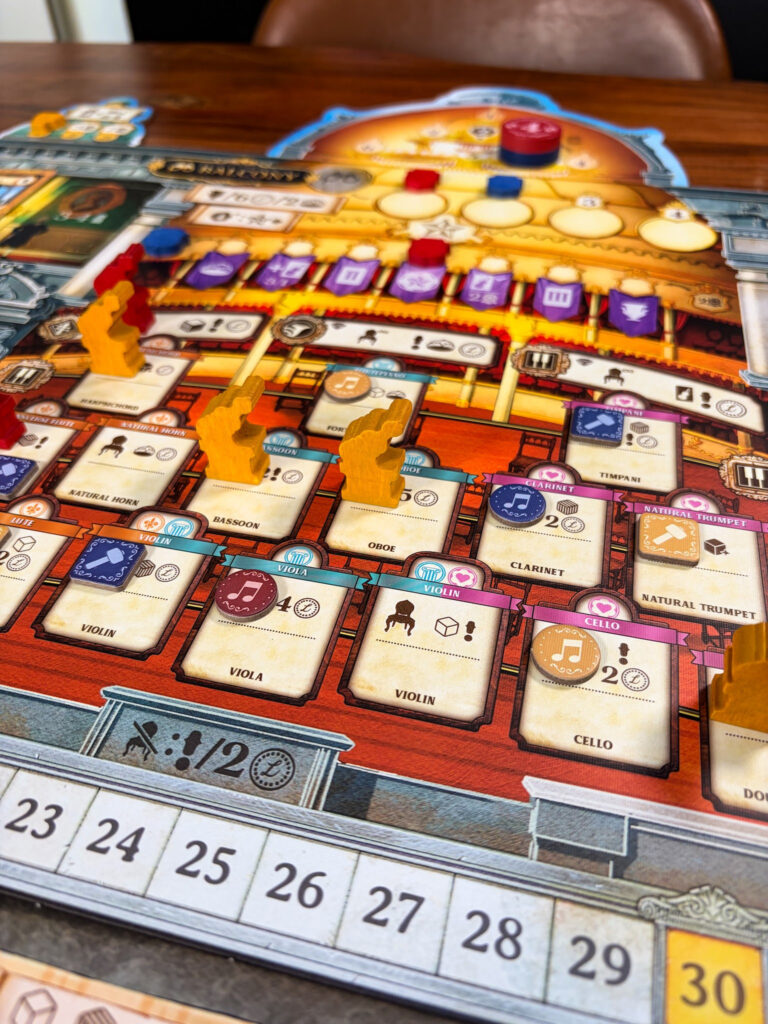
At its core, Luthier is a worker placement game with a clever twist that incorporates hidden bidding. Players must carefully decide not only where to place workers but also which worker value to commit, since the highest value gains priority at each location. Priority feels crucial because available cards and actions are limited every round. While this system can occasionally be frustrating, it adds tension and meaningful decision-making. Recruiting accomplices and using them effectively provides ways to mitigate bad timing and improve your chances.
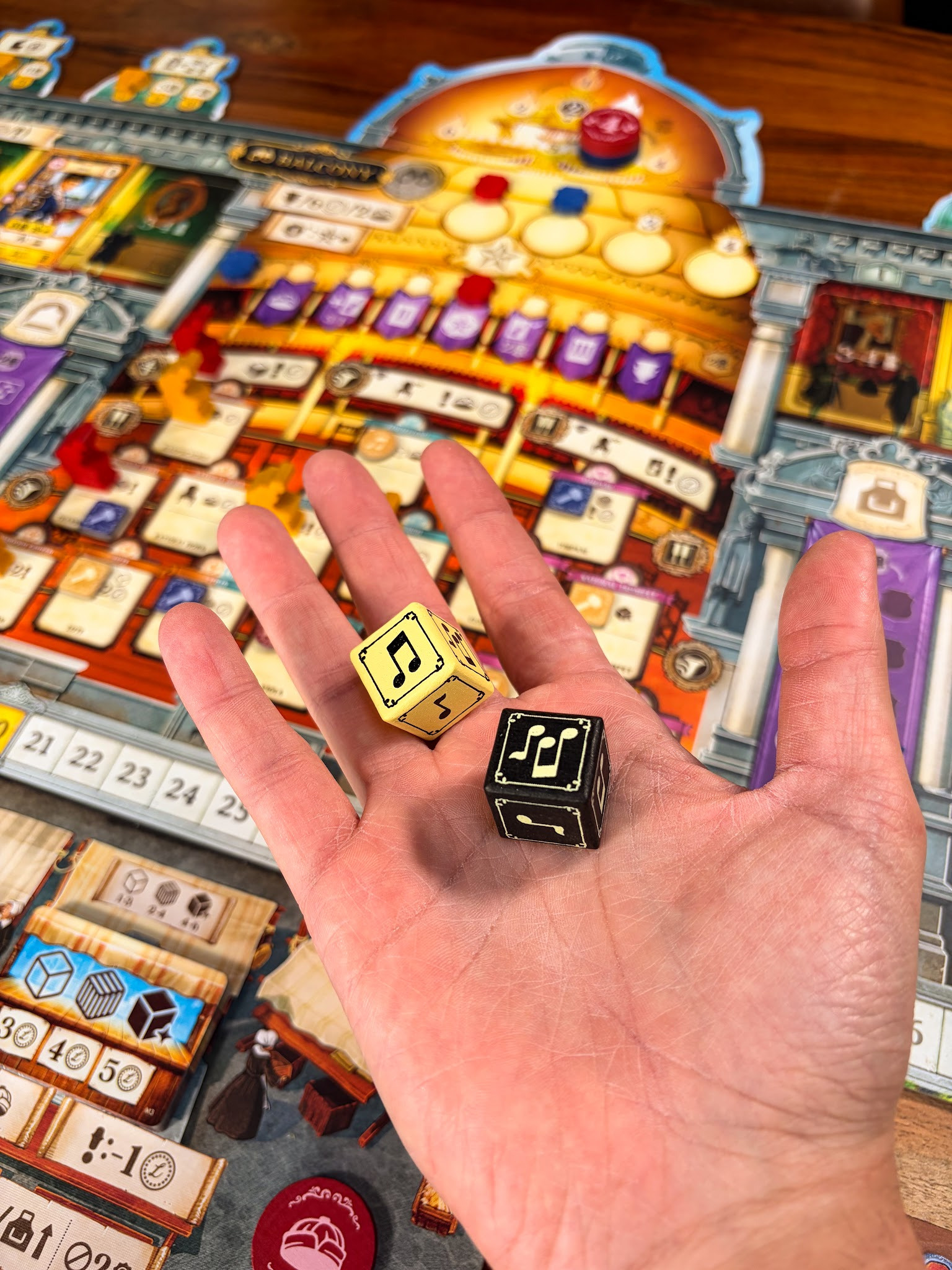
The variety of locations and advancement tracks allows players to pursue different strategic paths depending on their goals. The perform locations add another layer by introducing dice rolling to meet performance requirements. Although luck plays a role here, multiple tools exist to influence outcomes and build a viable performance-focused strategy.
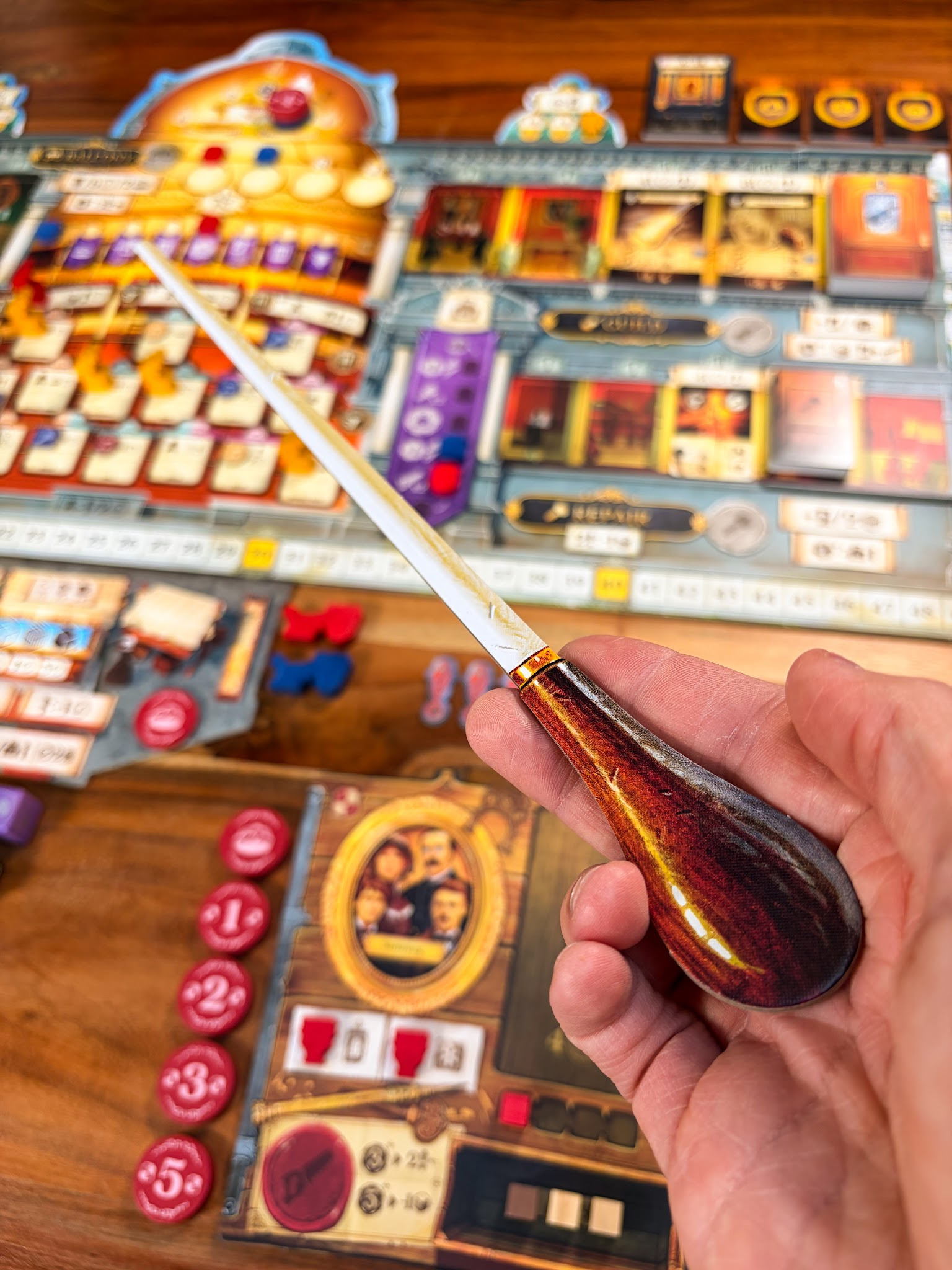
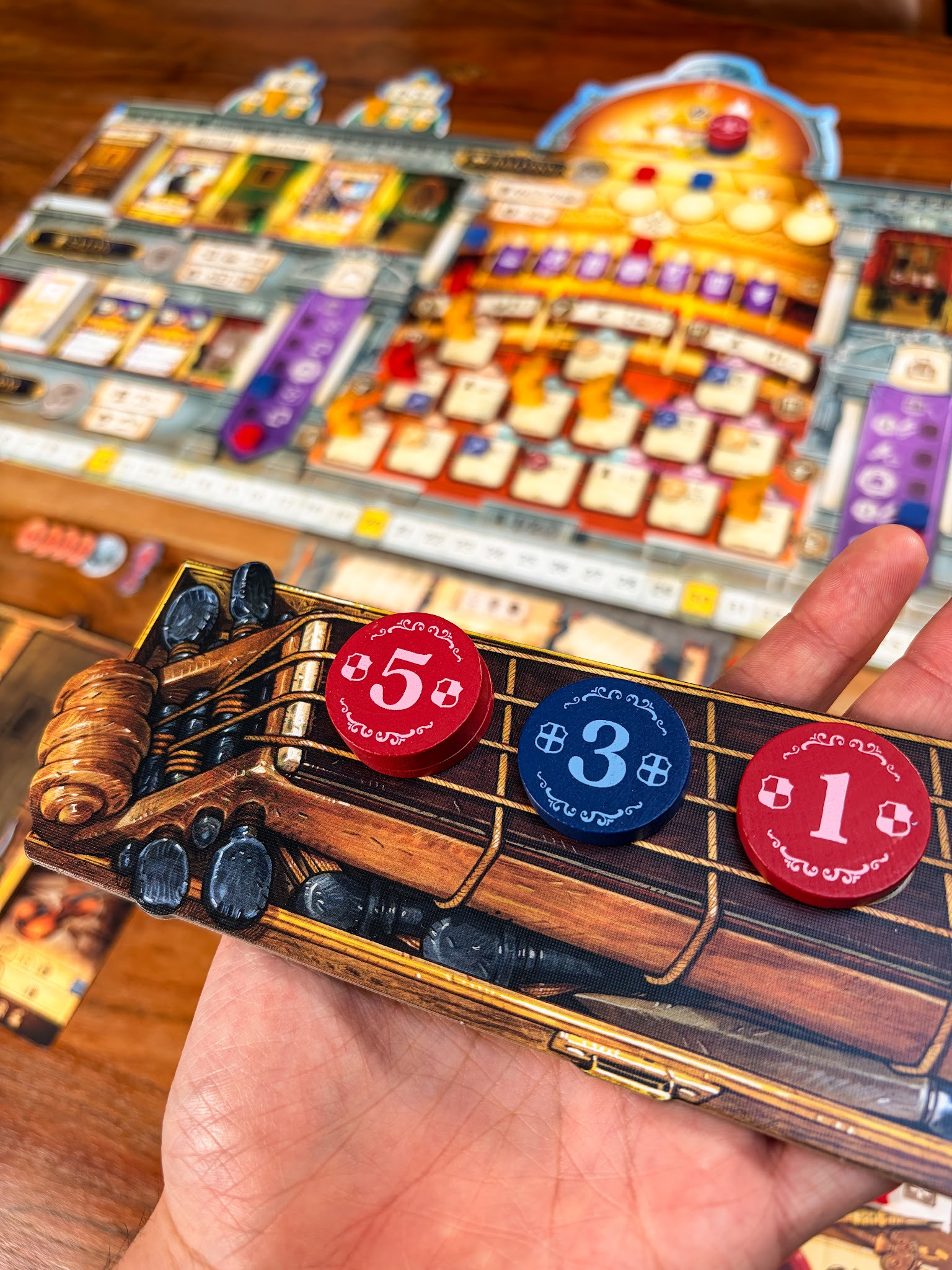
The theme and artwork truly bring the experience to life. Historical figures such as Francesca Caccini, Mozart, Leopold II, and Queen Victoria appear throughout the game, strengthening the immersive atmosphere. Component quality is excellent, featuring beautifully illustrated cards, wooden tokens, and even a cardboard conductor’s baton that proved surprisingly useful when teaching the game.
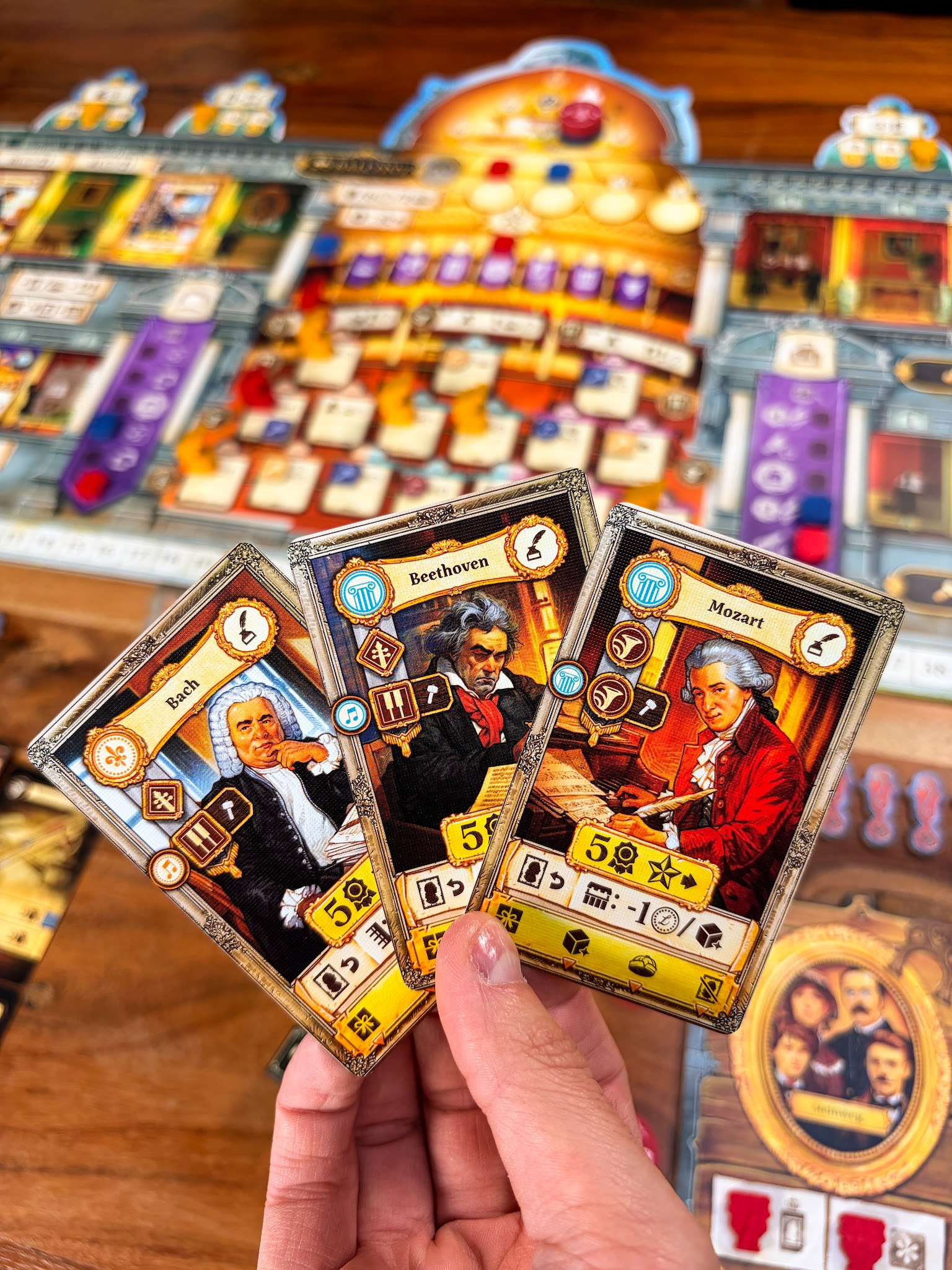
In addition to the helpful rehearsal system, the game includes an excellent solo mode for players who enjoy tackling complex designs alone. Overall, Luthier is an impressive advanced worker placement game that introduces fresh ideas while remaining deeply strategic. It is not suited for beginner board gamers, but it can certainly motivate players to grow into heavier games over time. I am unsure how often it will reach the table in my group since I am usually the only one drawn to heavier titles, though I expect to enjoy solo sessions whenever the opportunity arises.