


Family board games: eight games that can really handle a mixed table
13 oktober 2026 · Bijgewerkt 28 juli 2026
Search for family board games and you usually get a list of the best-selling boxes. Handy, but it does not answer the question. What you actually want to know is: which game survives a table with an eight-year-old, a teenager and two adults all sitting at it at once?
That is a different question, and there is an honest answer to it. Below are eight board games that meet all four of the requirements we explain further down, grouped by the problem they solve. Not a ranking, because the most popular board games for the whole family are not automatically the best ones for your table. If you are looking for that popularity list after all, you will find it in our top 10 board games.
What makes a game a real family game?
Four things, and the fourth is the most important.
First, it has to bridge an age gap. A child and an adult both need something to do at the same table, without anyone losing on purpose. Because children notice.
Next, nobody should be knocked out and nobody should be sitting idle. Games in which you are eliminated halfway through or wait five minutes for your turn do not come back out of the cupboard on a weeknight.
The explanation has to fit into ten minutes. Otherwise the game starts at eight o'clock and it is bedtime before the first turn has been played.
And then the fourth point: the skill gap between parent and child must not be fatal. Someone who has played board games for fifteen years will beat a ten-year-old in any game where only experience counts. A good family game does something about that, with luck, with hidden information, or by asking for something children are actually better at.
When a young child is playing
Mountain Goats Legacy
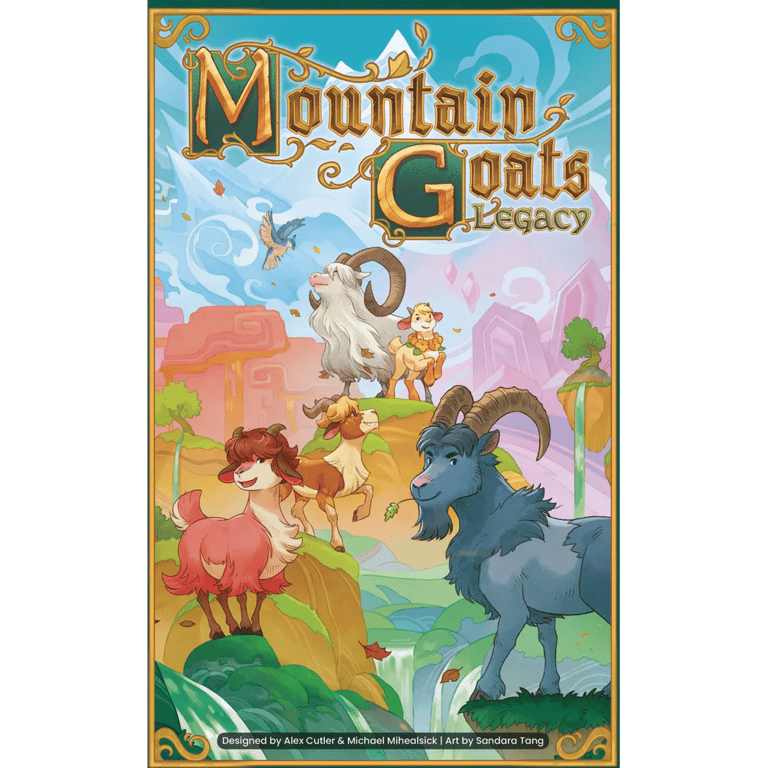
2 to 5 players, ages 7+, about 45 minutes.
Mountain-climbing goats, dice, and a mountain you climb together. Every time you play, you unlock something new, so the game grows along with you.
Of these eight, this is the game with the lowest age, and the only one in which the dice decide the outcome. That last point is exactly what a mixed table needs: a seven-year-old can simply beat an adult here. Keep one thing in mind before you start, because it is a legacy game: whatever you unlock stays unlocked, so play it with the same group. Mountain Goats Legacy
Project L
1 to 4 players, ages 8+, about 30 minutes.
Fitting puzzle pieces into shapes, and every finished puzzle gives you new pieces that make the next one go faster. There is nothing to read and everything is physical, which works better for children than a game full of card text.
It is the quickest game on this list that offers real choices: thirty minutes, and after two turns everyone understands how it works. What comes after that is optimising, and that is where the fun lies. Project L
When the group is big or keeps changing
Hues and Cues
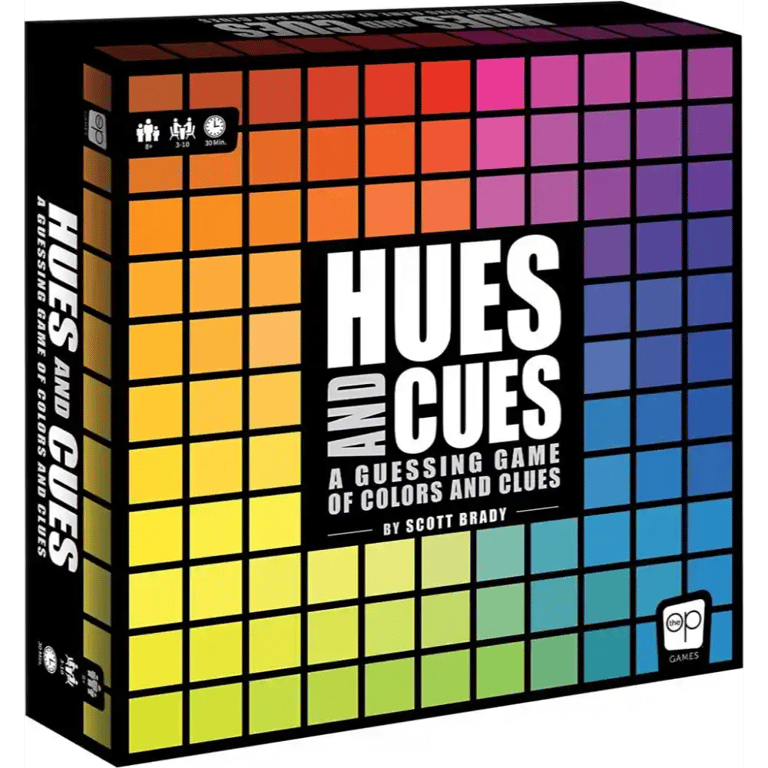
3 to 10 players, ages 8+, about 30 minutes.
On the table is a board with 480 shades of colour. You secretly pick one and give a single word as a clue; the others put a pawn on the shade they think you mean.
Up to ten players, and that makes it the only game of these eight that will get you through a birthday party. An eight-year-old is not at a disadvantage here either, because "sunset" means much the same thing to a child as it does to an adult. The discussion that breaks out afterwards is half the game. Hues and Cues
Star Wars: Battle of Hoth
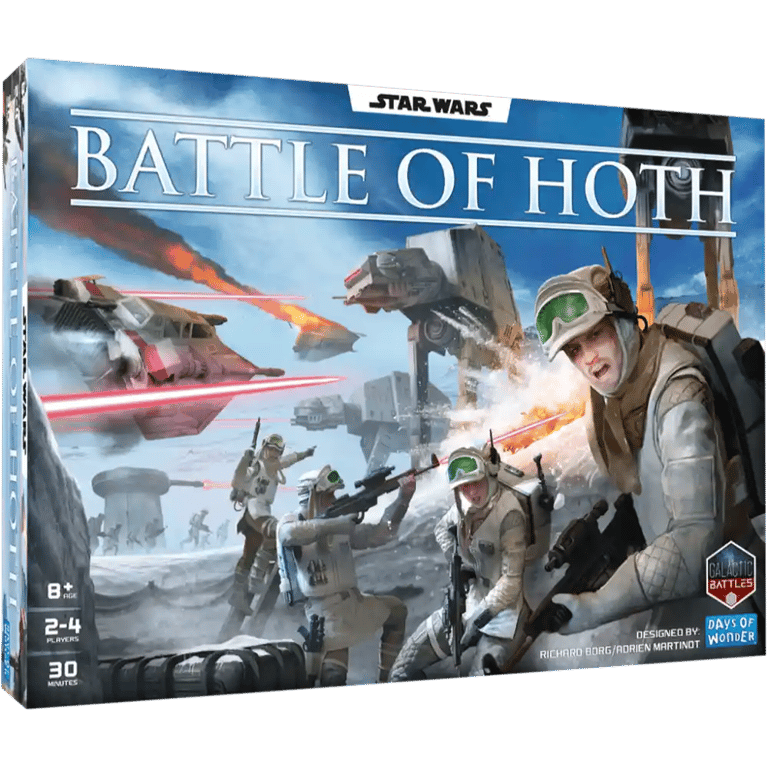
2 to 4 players, ages 8+, about 30 minutes.
Rebels against the Empire on the ice planet Hoth, with miniatures on the board. You pick a side and play out the battle.
This is the choice for a family where the theme is more of a draw than the game mechanics. Children who know Star Wars are hooked straight away, and with two to four players it fits into a weeknight. Star Wars: Battle of Hoth
When there are just two of you
Toy Battle
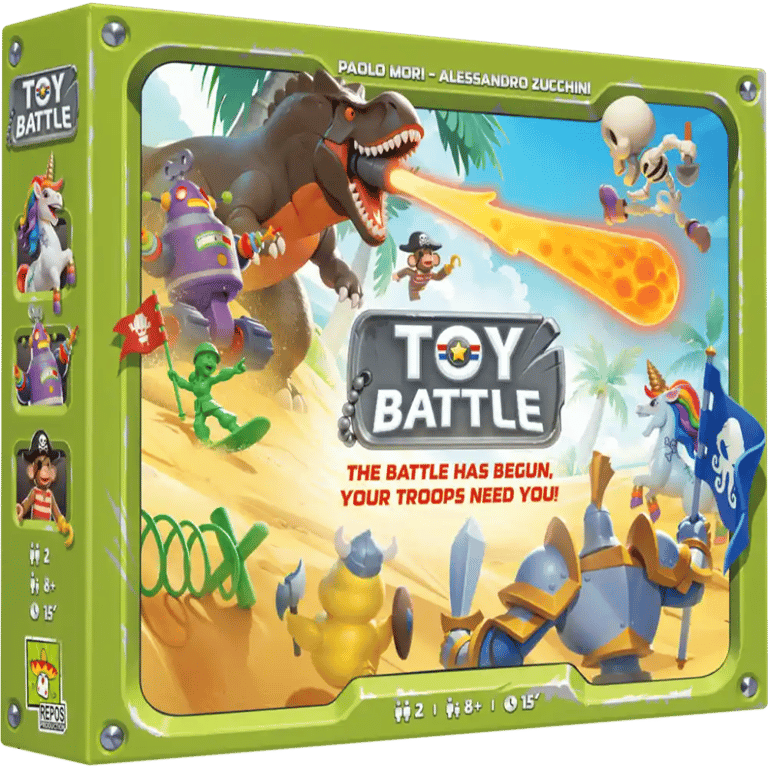
2 players, ages 8+, about 15 minutes.
Toy troops pushing each other off the board, in a short and colourful duel. A quarter of an hour per game, so you can easily play three in a row.
For a parent and child together, this is the handiest box on this list. Short enough to replay, and after the first game an eight-year-old understands exactly where it went wrong. Toy Battle
When you want to puzzle away calmly together
The three below are similar, and that is no coincidence: all three are tile-laying games in which you build something beautiful without anyone taking anything away from you. They also share the same drawback, and we say so honestly.
Cascadia
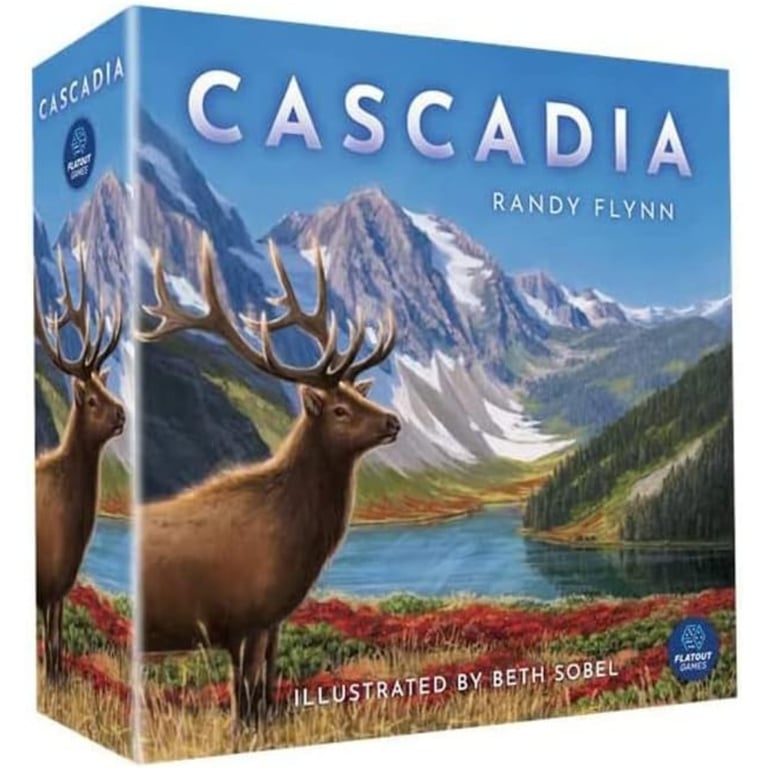
1 to 4 players, ages 10+, about 45 minutes.
Laying landscape tiles and placing animals on them, so that bears, salmon and hawks each score points in their own way. The board you create is different at the end of every game.
Of the three tile-laying games, this is the best known and the most structured: the scoring rules change from game to game, so you never play the same puzzle twice. Cascadia
Harmonies
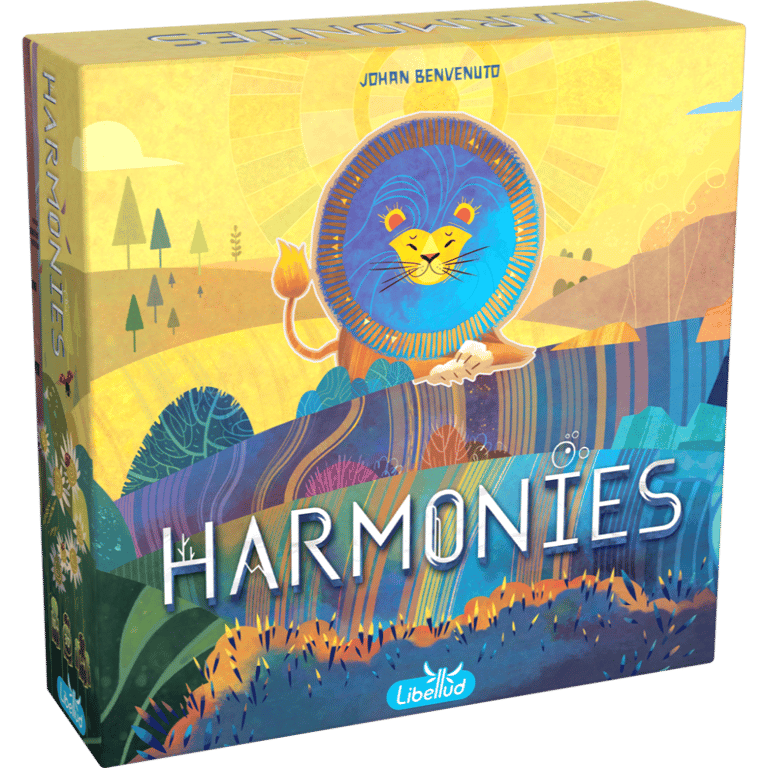
1 to 4 players, ages 10+, about 45 minutes.
Stacking coloured tokens into landscapes, and placing animals on those landscapes that score points if their habitat is right. An owl wants trees, a fish wants water.
People looking for something that will not cause arguments at the table ask us about this one most often. It also looks prettier on the table than the rest of this list. Harmonies
Wispwood
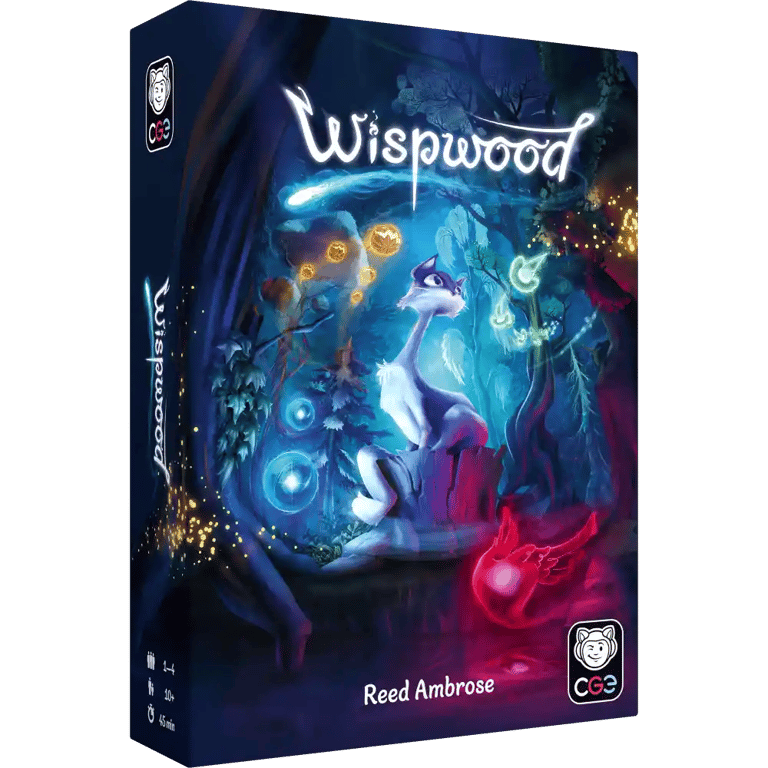
1 to 4 players, ages 10+, about 45 minutes.
You build an enchanted forest full of glowing wisps and try to create the most beautiful glow. The publisher itself calls it a family game. Wispwood
The shared drawback. In all three, thinking ahead counts for more than luck, so an adult who is good at puzzles will simply win. For a table of teenagers, that is fine. If there is an eight-year-old at the table who cannot handle losing, start with Mountain Goats Legacy or Hues and Cues.
Board games for the whole family: which will it be?
If the youngest child is seven or eight, that leaves Mountain Goats Legacy, Project L, Hues and Cues, Toy Battle and Star Wars: Battle of Hoth. The other three start at age ten.
If the group is bigger than five, Hues and Cues is the only one that can keep up; it goes up to ten players.
If you notice the children are fed up with losing to you, there is a way out that often works better than choosing a different game: play together against the game instead of against each other. You will find out which games do that in the best cooperative board games.
And if you are looking for the top 10 most popular family board games, meaning the titles that go over the counter most often rather than the games that best suit a mixed table, that is a different list: you will find it in our top 10 board games. If only children are playing, take a look at the kids' board games. If you are mainly watching what it costs, the smaller boxes are grouped together under budget board games.
Frequently asked questions
Are there any other fun family games? Certainly, and some of them are even stronger at a mixed table than the eight above. They are not on the list because they are not board games, but card, dice or roll-and-write games. Five that we most often see working for families: Beverbende (card game, published in English as Rat-a-Tat Cat, ages 6+, up to 6 players, a memory game in which children are sharper than their parents), Regenwormen (dice game, published in English as Pickomino, ages 8+, up to 7 players), Clever and Keer op Keer (published in English as That's Pretty Clever! and Encore!, both roll-and-write games in which everyone writes along with every roll, so nobody waits) and Arboretum (card game, ages 8+, and the only one in which you really get in each other's way).
How young can a child be and still join in? Seven, with Mountain Goats Legacy. If you are looking for something for a six-year-old, none of these eight board games will do; Beverbende from the question above does start at six, though.
How many players can join in? Five of the eight play up to four players, Mountain Goats Legacy goes up to five and Hues and Cues up to ten. If you have a big group, that last one is the only game on this list that can handle it.
What if the age gap at the table is very large? Then choose a game in which luck or feel plays a part, not experience. Mountain Goats Legacy runs on dice and Hues and Cues on how someone describes a colour. In the three tile-laying games the best puzzler wins, and that is usually the adult.