


Fields of Arle review
4 augustus 2026 · Bijgewerkt 4 augustus 2026
A Solo Review, Fields of Arle
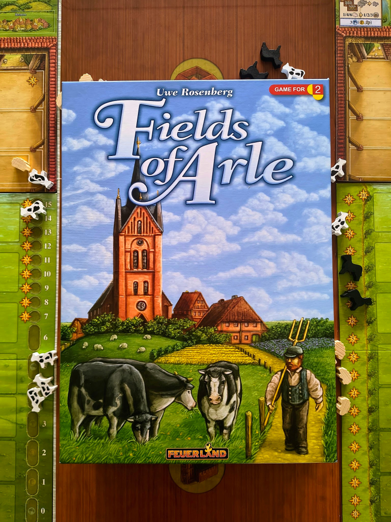
Feuerland Spiele | 1 tot 2 players | Ages 13+ | 60 tot 120 minutes
In Fields of Arle, you return to 18th-century East Frisia and step into the shoes of a farmer. Over the course of four and a half years, alternating between summer and winter, you have the opportunity to transform your small plot of land into a prosperous farm. But what kind of farm will you create? Will you fill your fields with cows, horses, and sheep while gathering resources for the surrounding villages and towns? Or will you focus on constructing buildings and developing fertile fields and forests that provide a steady flow of resources every year? Or perhaps you'll find the perfect balance between the two. The freedom of choice is enormous. Once you've decided on the direction you want to take, you have nine rounds to optimize your actions, with careful long-term planning being rewarded later in the game. Changing strategies is certainly possible, but it often comes at the cost of the efficiency you've already built up.
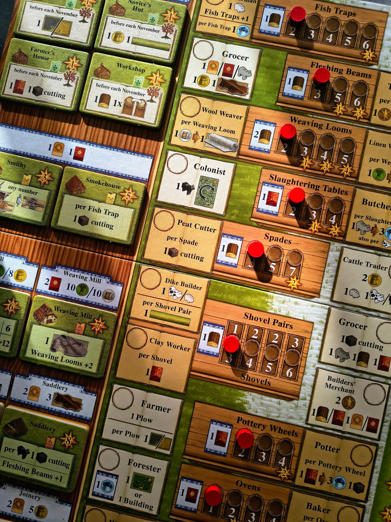
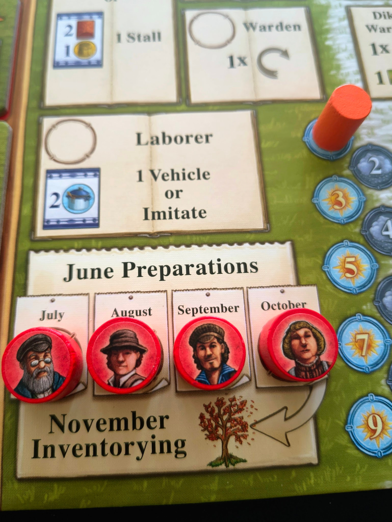
Each round, you only have four workers available to perform actions. Choosing those actions wisely is essential. You'll often find yourself wishing you had just one extra action to accomplish everything you want, whether that's gathering resources and food, constructing buildings, or building vehicles. By upgrading your tools, many actions become more powerful and produce greater rewards. Resources can be used to further develop your own land or traded for food. To keep everything running smoothly, you'll need to maintain a healthy supply of food and peat to feed your workers and keep them warm. With each passing season, your farm gradually comes to life.
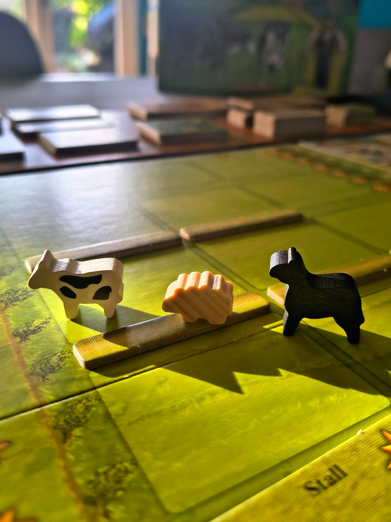
Fields of Arle takes you back to the basics of rural farming, where everything is built up step by step. The various player boards and components, including the animal meeples, really bring the theme to life. And no, there are no fancy screen-printed meeples here. Instead, you'll find simple wooden cows that you decorate yourself with little spot stickers. Yes, setting everything up takes some time, and the sheer number of components can feel overwhelming at first, but it's more than worth the effort. The opening rounds may bring some decision paralysis. Where do you start, and which path do you choose? This is where the foundation of your puzzle is laid. Your first few actions may seem insignificant, but they all contribute to your long-term goals. Around the halfway point, everything starts falling into place, and you finally see the investments from those early rounds paying off.
Fields of Arle is not a game you casually throw on the table. It's a game you deliberately make time for. Although it looks massive at first glance, it never feels overwhelming once you're playing. In fact, it has a surprisingly relaxing pace. As you become more familiar with the game, sessions become smoother and faster. In the solo game, your attention is focused entirely on developing your own farm. There is no AI opponent to manage, allowing you complete freedom to plan your turns exactly as you want. Whether you choose sprawling meadows filled with livestock or an efficient farm packed with buildings, you always get the satisfying feeling that you're creating something truly your own.
Gameplay
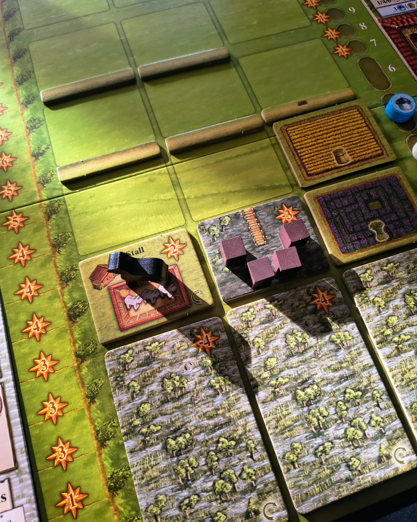
In Fields of Arle, you develop your own piece of farmland over the course of nine rounds, alternating between summer and winter. You begin with a modest plot containing a stable, a grain field, a flax field, and a peat bog. You also start with a barn, a horse, and a handful of basic resources.
Each round, you may perform four actions. Depending on the current season, you'll have access to either summer or winter actions. These include upgrading your tools, gathering resources, improving your land, and constructing buildings and vehicles. Each action space can only be used once per round, so careful planning is essential. After placing your fourth worker, the season ends and several events take place.
Actions and Development
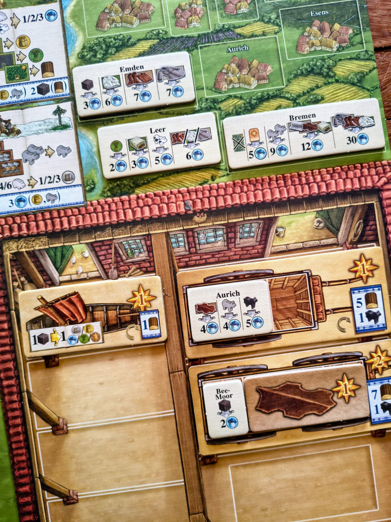
You improve your tools by taking the workshop action. Better tools allow you to collect more resources or process larger quantities at once. For example, you'll gather more wood when chopping trees or remove larger amounts of peat in a single action. Processing also becomes more efficient, allowing you to turn wool into cloth or hides into leather more effectively. Resources play a vital role throughout the game, as they are required for constructing buildings, building vehicles, and trading with neighboring villages.
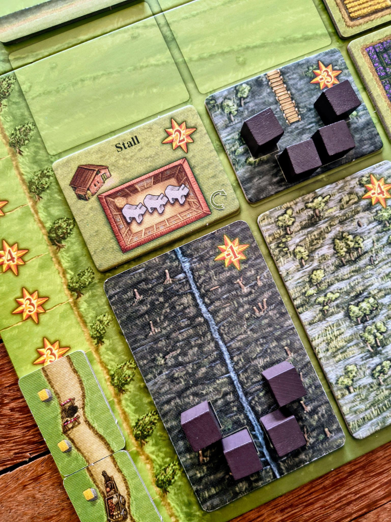
At the start of the game, your available land is limited. To expand it, you'll need to move dikes and clear peat bogs. Peat must first be drained before it can be harvested. Once all the peat has been removed, the bog itself can be cleared, making room for further development of your farm.
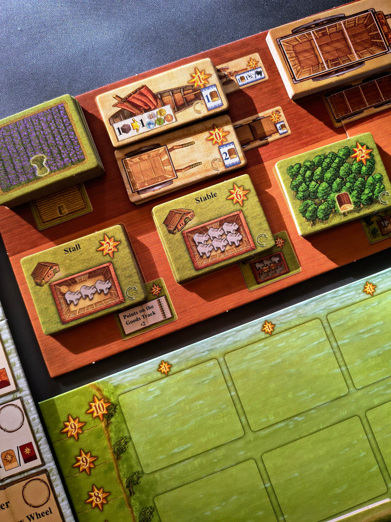
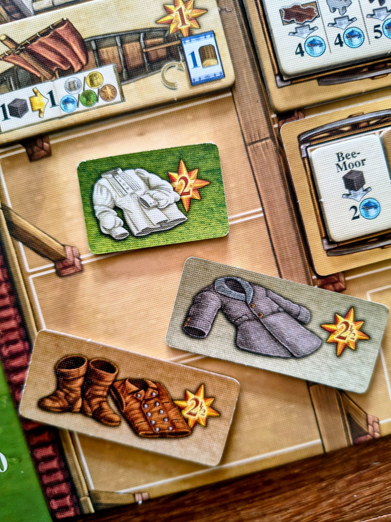
Buildings provide a variety of benefits. Some generate ongoing income or victory points, while others grant immediate actions or valuable goods. You can also build vehicles, which are stored in your barn and upgraded over time to increase their carrying capacity. Vehicles allow you to process goods, such as turning leather into clothing, and transport products to nearby towns. Trading not only provides food but also advances you along the travel track, earning additional victory points.
Certain actions also allow you to acquire animals such as horses, sheep, and cows. These animals generate resources and are worth victory points at the end of the game. They graze on your land and dikes or can be housed in stables, although every space has a limit to how many animals it can hold.
End of the Season
At the end of every season, several events occur. At the end of summer, your animals produce food and your fields generate resources. However, winter is approaching, so you'll also need enough food to feed your workers and enough peat to keep them warm. At the end of winter, sheep produce wool, and breeding takes place. Every pair of animals of the same type housed in a stable produces a third animal. Resources and goods stored in vehicles are turned over and returned to your supply. Any goods delivered to neighboring villages are placed on the travel track.
After the ninth and final season, the game ends and all victory points are counted.