




Feya's Swamp review
3 november 2026 · Bijgewerkt 3 november 2026
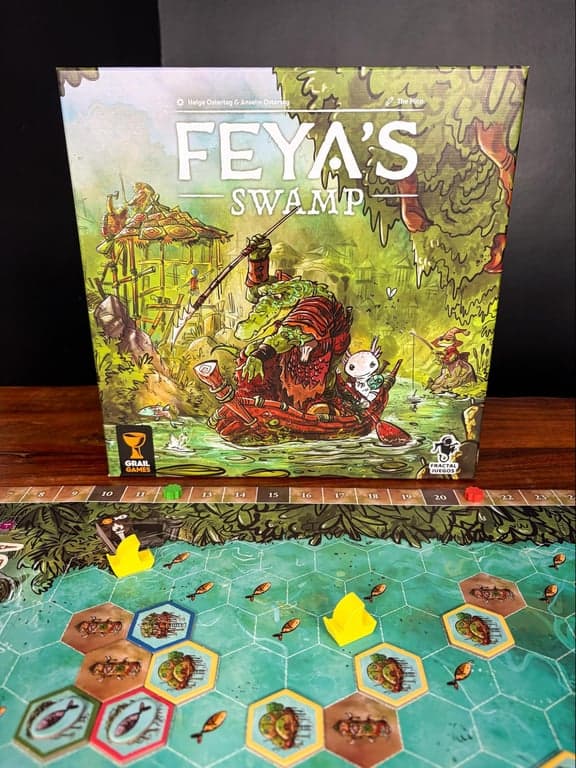
Fractal Juegos | 2 to 4 players | Ages 12+ | 80–100 minutes
Gameplay
In this strategy game from publisher Fractal Juegos, you lead a clan of swamp dwellers determined to become the wealthiest of them all. To achieve this, you'll search for the best fishing spots, build settlements, trade with others and explore abandoned temples. During setup, the swamp board is placed in the centre of the table, along with the spirit tiles, temple tiles and neutral workers. The round board is prepared with random fish cards, scoring cards and bonus tiles. Each player receives their own clan board and places the corresponding settlement tiles, boats, workers, objective pieces and sailing token in their designated spaces.
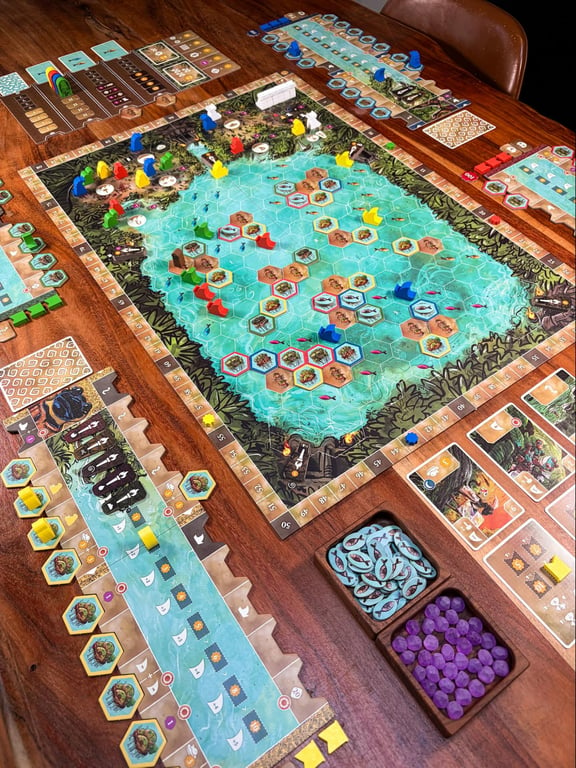
The game consists of four rounds, each divided into three phases. During the income phase, you receive resources and skills based on the income shown on your clan board. Players then take turns performing actions. You can fish, trade, build settlements, sail, improve your sailing ability, celebrate or worship a spirit. When you run out of workers, or simply feel it's the right time to stop, you can pass. You then choose a round bonus tile and one of the new guide cards. This also determines your position in the turn order for the next round.
During the maintenance phase, you prepare everything for the next round. You retrieve your workers, reveal a new fish card and turn over your new guide card. After the fourth round, final scoring takes place. You earn points for islands, scoring cards, fish tokens and leftover mana and gold. The player with the most victory points wins.
Impressions
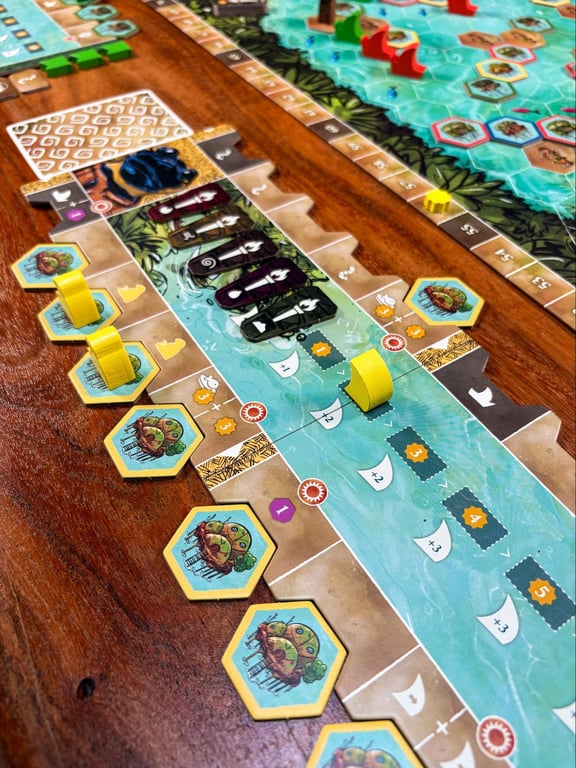
The first thing that caught my attention was the beautiful artwork. I've always had a soft spot for games with cosy themes and cute animals. And although these little creatures don't exactly live in the most appealing surroundings, they're absolutely adorable. The swamp board looks gorgeous, and I particularly liked the individual clan boards, with their colourful settlement tiles lined up along the edges. The gameplay is interesting too. It's actually a reimplementation of Kaivai, which I haven't played myself. It combines worker placement with territory building.
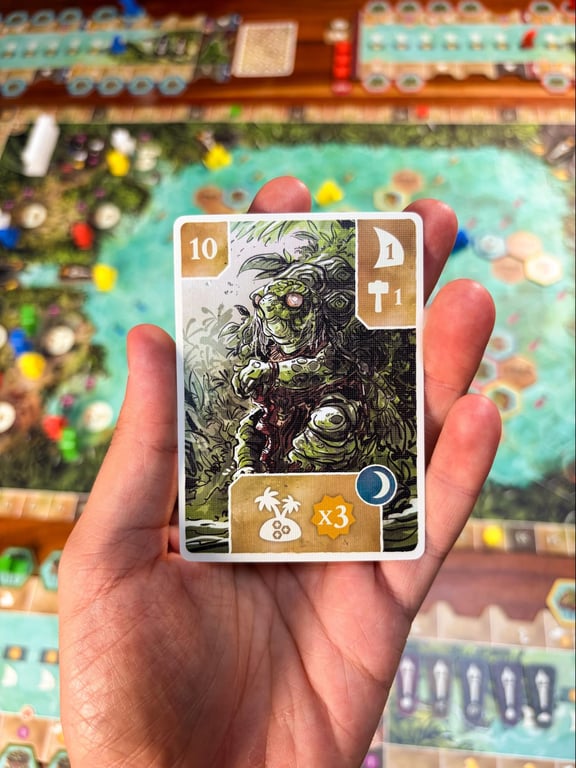
One mechanic I particularly enjoyed is being able to decide when to pass, allowing you to choose a guide card for the next round. These cards can affect things like settlement costs, how far you can sail and other aspects of the game. That means stopping can be just as important a decision as taking another action. Trading is interesting too, because your actions often help other players and can even earn them points. This creates some tricky decisions: you want to get as much as possible out of your own actions without giving your opponents too much of an advantage. There are plenty of ways to score points, encouraging you to explore different parts of the game. At the same time, you need to be careful not to spread yourself too thin.
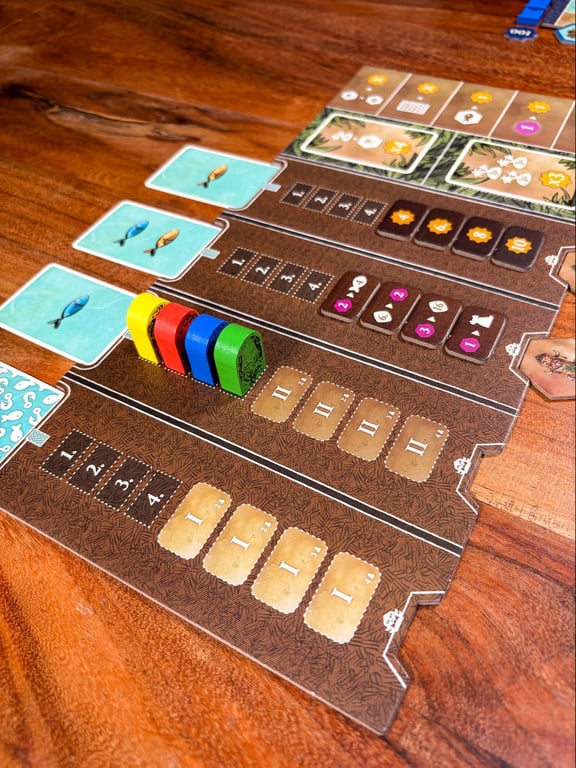
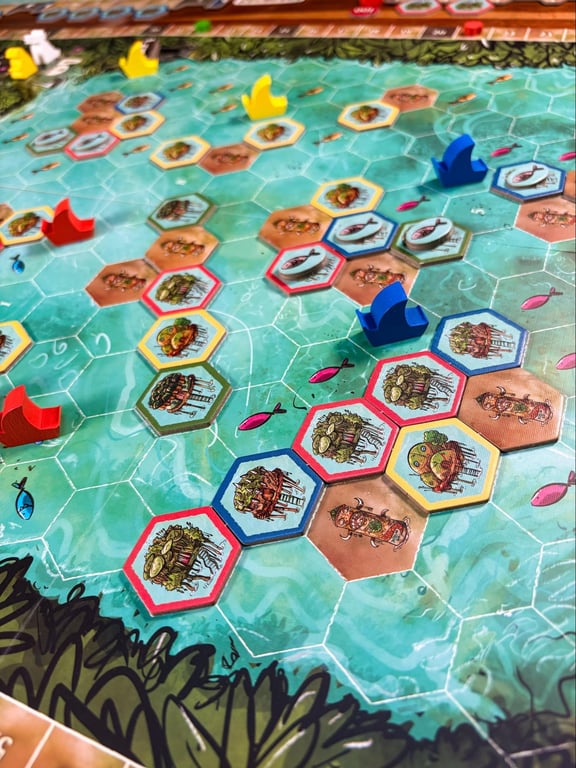
Finding the right strategy can be quite challenging, but once you get into the flow of the game, you gradually find your way. In the games I've played, however, scores tended to increase at roughly the same pace. That made it feel difficult to catch up if you fell behind early on. This can be a little discouraging, especially since a game takes quite a while to play. Despite the playing time, I didn't find the game overly complicated. Overall, I think it's a really enjoyable medium-weight eurogame with a surprisingly cosy theme. The box is also fairly compact compared to other games in the genre, making it easy to bring along to a game night.