


dnup Review
6 augustus 2026 · Bijgewerkt 6 augustus 2026
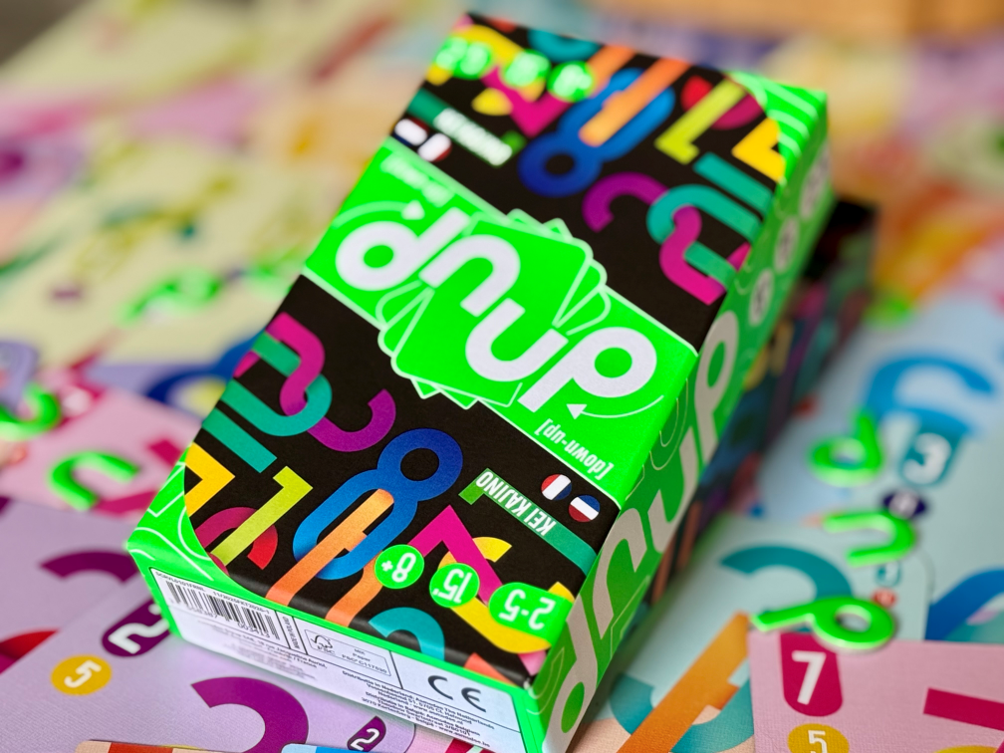
Asmodee | 2 tot 5 players | Ages 8+ | 20 minutes
The successor to Scout is called Dnup.
Why? Because, just like in Scout, every card has two different values. The top half and the bottom half each represent a different value. Flip the card over and its value changes. Down becomes up... down-up... Dnup.
As I mentioned, the designer of Scout has once again built the game around this clever concept. On your turn, you play a set. A set consists of one or more cards with the same value (based on the current top side). Every following player does the same. However, you may only play a set if it contains a different number of cards than the current set, or if it has the same number of cards but a higher value.
Whenever someone beats a set with a stronger one of the same size, the previous set returns to its owner's hand. But that's not all. Those cards are flipped over before returning to your hand. This creates interesting opportunities. You can intentionally play a weak set, hope another player forces it back into your hand, and then use the flipped cards to unlock a much stronger combination later.
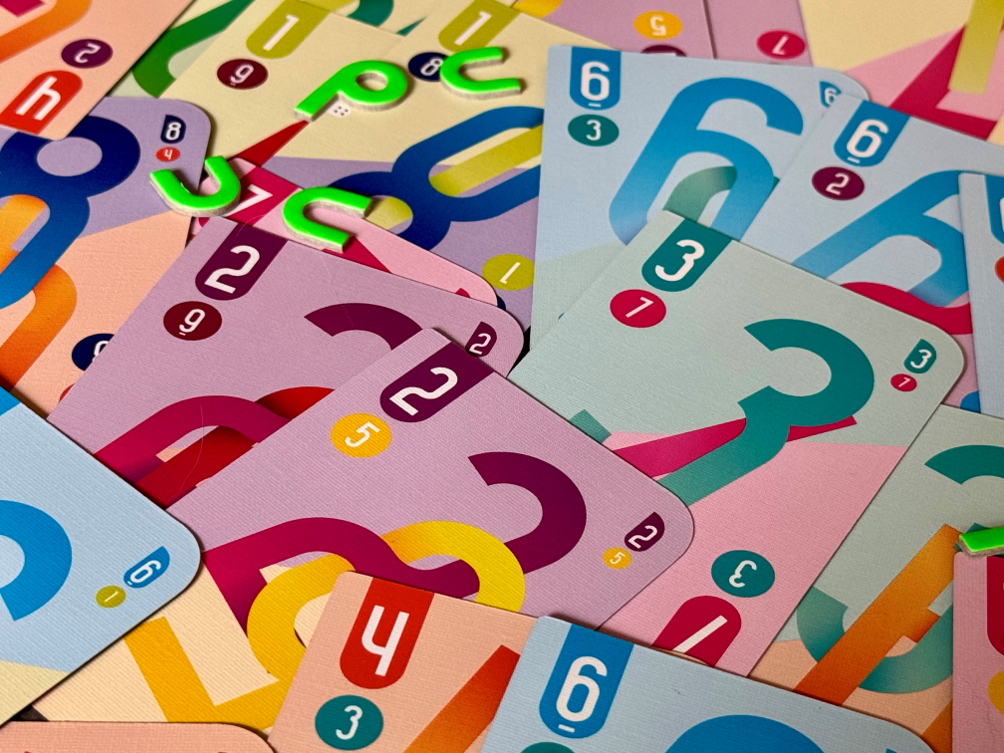
Your goal is to get rid of every card in your hand as quickly as possible. If your turn comes around again and the set you previously played is still in front of you, you discard those cards permanently. Repeat this often enough and your hand will eventually become empty.
However, that's not the only action available. You can also add a card to an existing set already on the table. When doing so, you'll need to pay attention to the other sets currently in play. For example, if there's a pair of threes on the table, you can't add a third three if another player already has a set of three sixes in front of them.
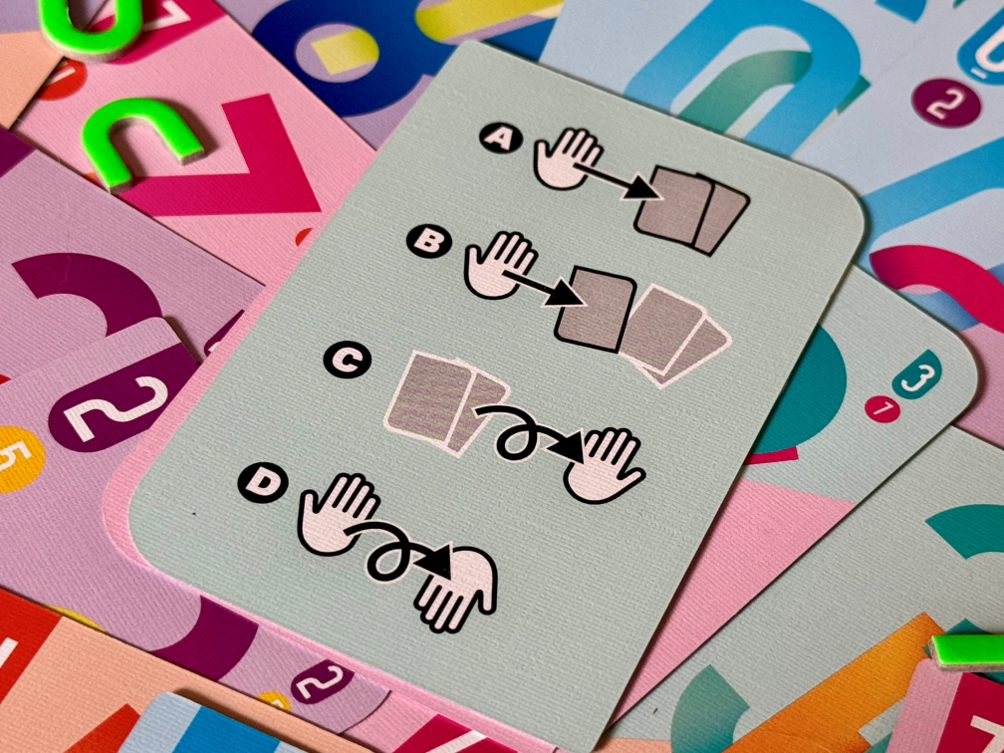
As mentioned earlier, cards are flipped upside down whenever they return to their owner's hand. You can also choose to voluntarily add cards to your hand by taking all the cards from another player's played set. This is the third type of action available on your turn. Once again, those cards must be flipped before adding them to your hand. Sometimes those flipped cards are exactly what you need to create an incredible new combination.
The fourth and final action is simply flipping every card in your hand. This is actually the one rule I like the least. I would have preferred the option to choose which cards to flip instead of being forced to flip them all. Since passing isn't allowed, you'll often find yourself taking this action simply because none of the other options are available.
That also sums up my overall feeling about the game. Before playing, I was genuinely excited. Scout is arguably one of the best card games ever made, and Dnup looked like it would add even more control and clever manipulation. In practice, that turned out to be a bit too optimistic. It's still an enjoyable and accessible card game, but the idea of deliberately flipping cards to create stronger combinations never quite reaches its full potential. There's simply too little control to reliably set these moments up, partly because of the randomness of the cards and partly because of the combinations your opponents play. That said, if you aren't specifically looking for that extra layer of strategy, Dnup still offers a fun, fast-paced card game that's easy to enjoy.