MO-FR ordered before


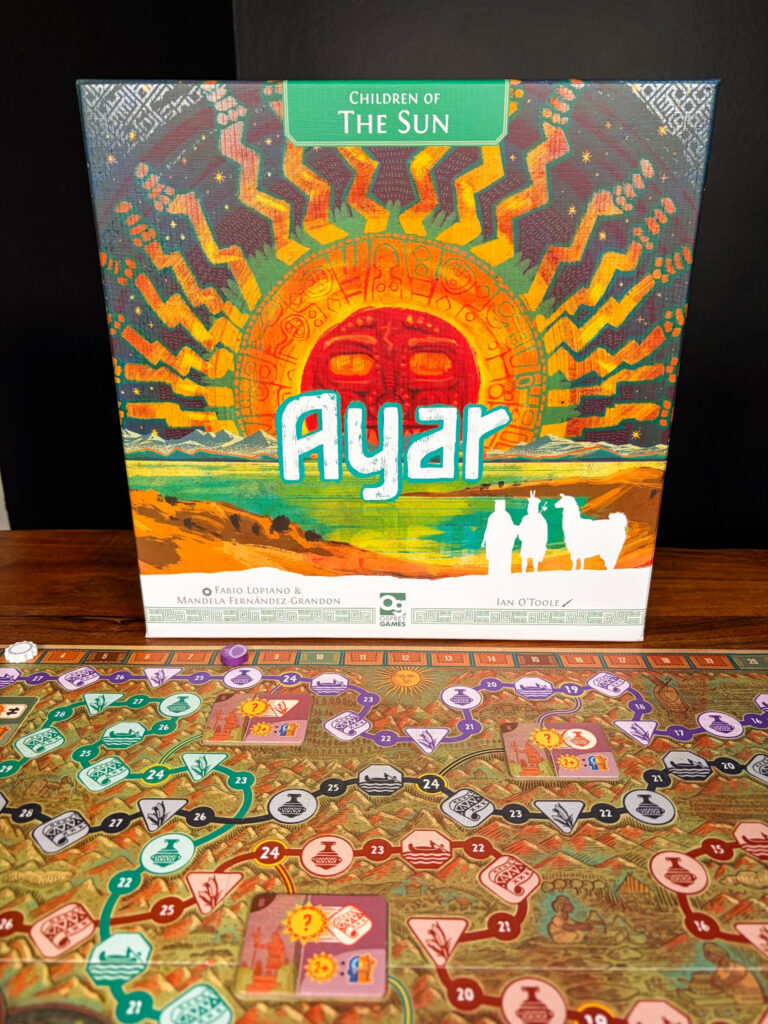
Ayar: Children of the Sun review
Osprey Games | 1–4 spelers | 14+ | 60–90 minuten
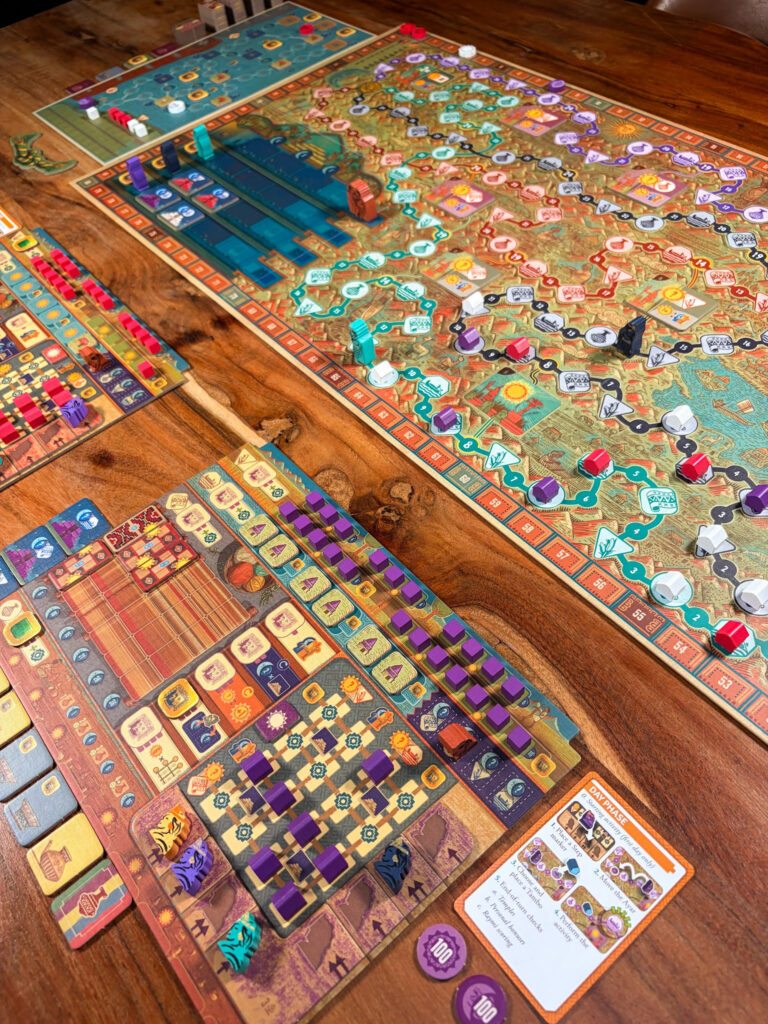
In this mid-weight eurogame, published by Osprey Games, players immerse themselves in the origin myth of the Inca. Each player represents one of the first clans of Tawantinsuyu journeying with the Ayar siblings sent by Inti, the sun god, and Mama Quilla, the moon goddess. Throughout the journey, players follow their teachings while developing skills in farming, pottery, weaving, and reed bundling.
After setting up the main board and individual player boards, the game unfolds over four rounds, each divided into a day phase and a night phase. During the day phase, players take turns placing one of their remaining step markers into an empty slot next to their tambo grid. After moving the matching Ayar along its colored path, players select a tambo, place it in an empty building slot behind the moved Ayar, and resolve its action.
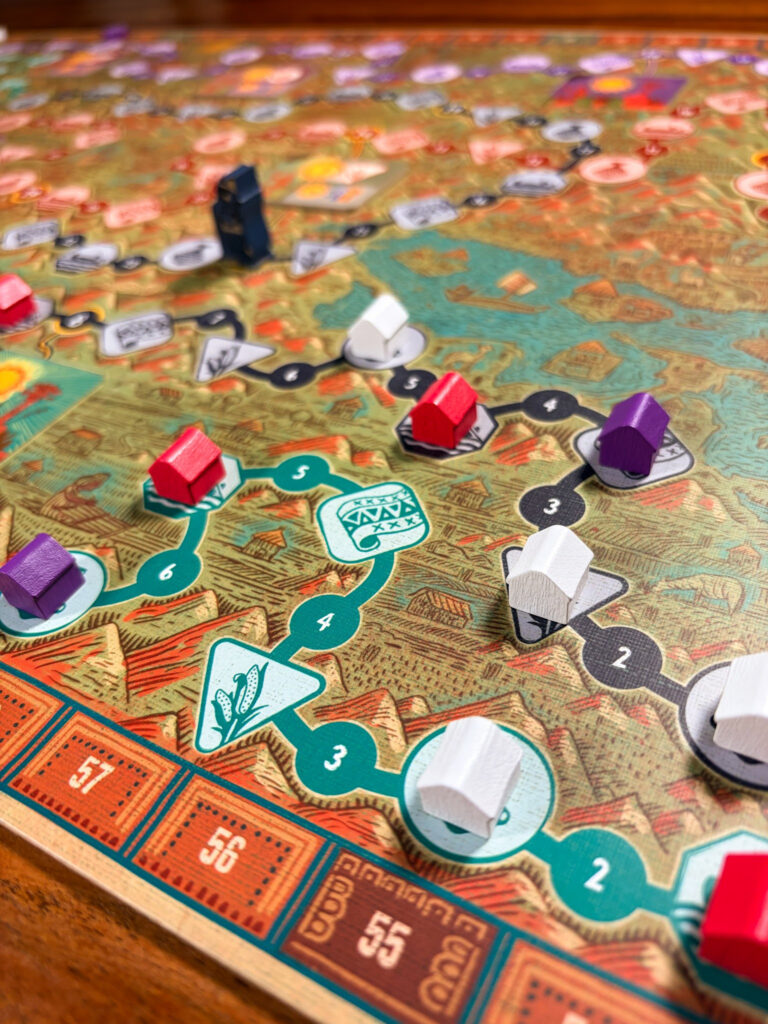
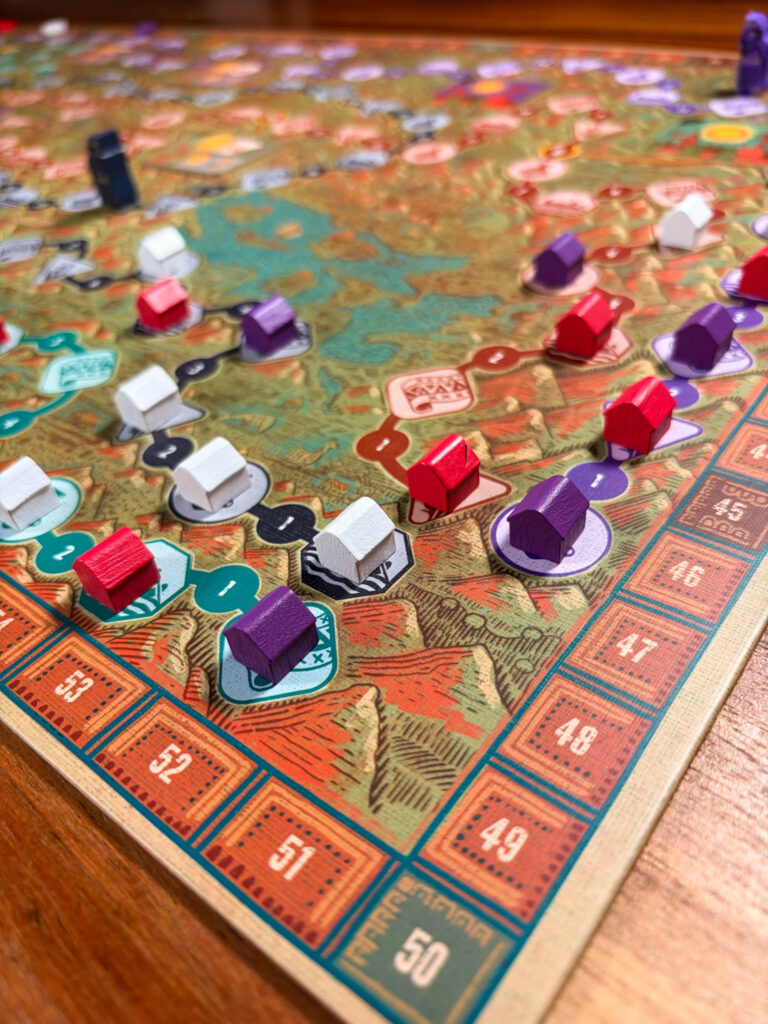
The pottery activity allows players to collect pots from the lake board, weaving provides textiles that are added to the weaving area on their player board, terrace farming lets players place maize into the farming area, and reed bundling moves their boat along lake paths while placing islands along the way. These activities reveal suns that contribute to Inti devotion scoring and improve moon scoring opportunities.
At the end of a turn, players check whether they meet the requirements to place temples on designated areas of the main board, granting additional moon points when an Ayar retires. Players also receive personal bonuses for emptied rows or columns and gain Inti devotion when Ayars reach Raymi tiles.
Once all step markers have been placed, the game moves to the night phase. The Ayar who has traveled the least retires, maize is harvested, and the Ayar couple reunites, allowing players to score previously placed temples for additional moon points. Players then score their matching step marker, gain sun points based on their Inti dial, and prepare for the next round. After four rounds, players assign their collected llamas to sun and moon markers to maximize their final score. The winner is the player whose lowest scoring marker is higher than everyone else's.
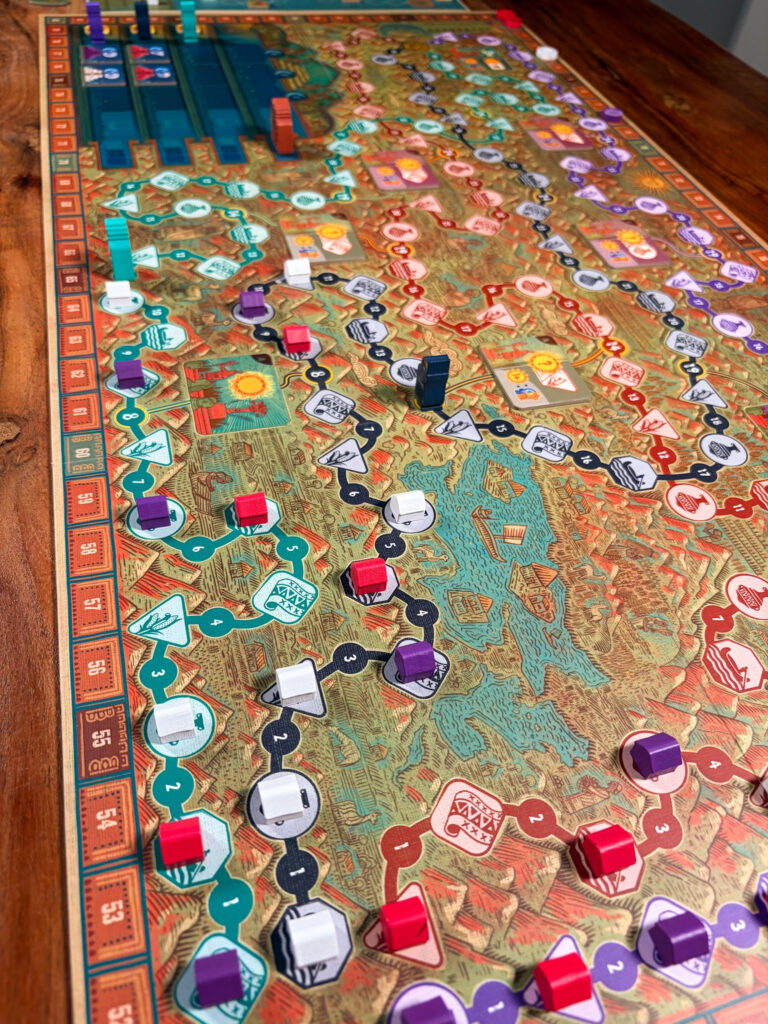
Impressions
As part of a trilogy series, my expectations were high, and the game delivered. The element that impressed me most was the theme. The narrative strongly supports the gameplay, drawing players into the story through beautifully designed components and activities that feel connected to the setting. Many eurogames feature thematic elements, but here the story feels genuinely integrated and develops naturally as the game progresses.
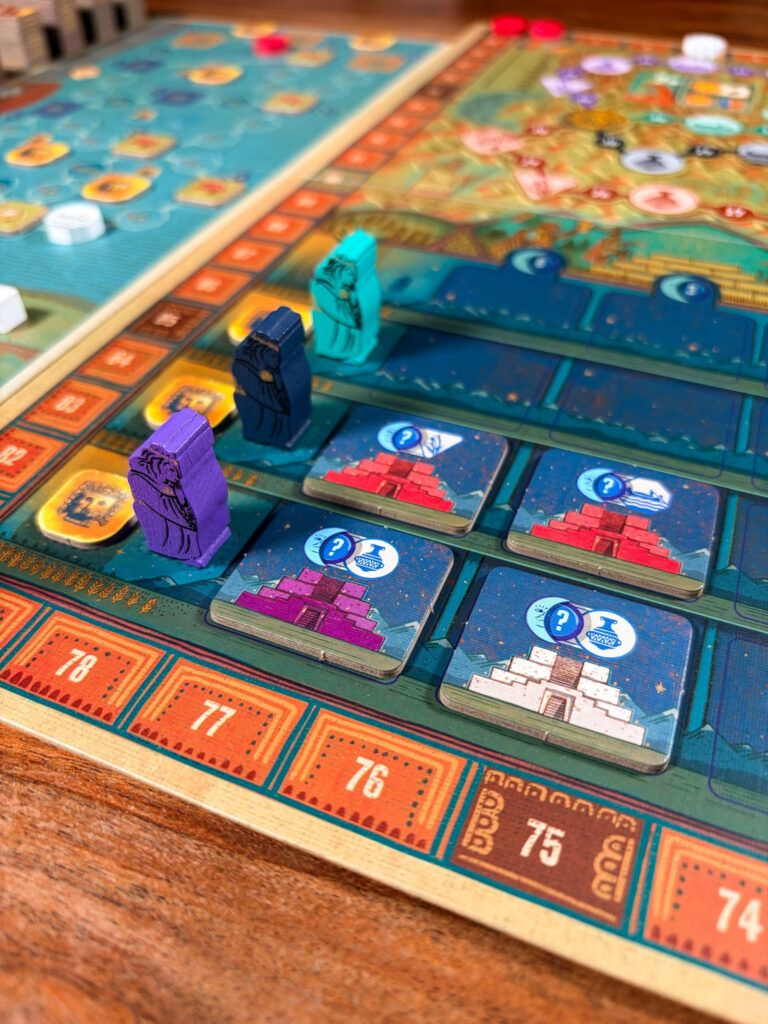
Another aspect I appreciated is the absence of cards, aside from player aids. While cards are common in eurogames and work well, relying on sturdy components instead creates a refreshing tactile experience.
Although the game sits firmly in the mid-weight category and requires some time to learn, I found it less overwhelming than similar titles thanks to its clear iconography and logical structure. The rulebook is particularly strong, offering helpful examples without unnecessary complexity.
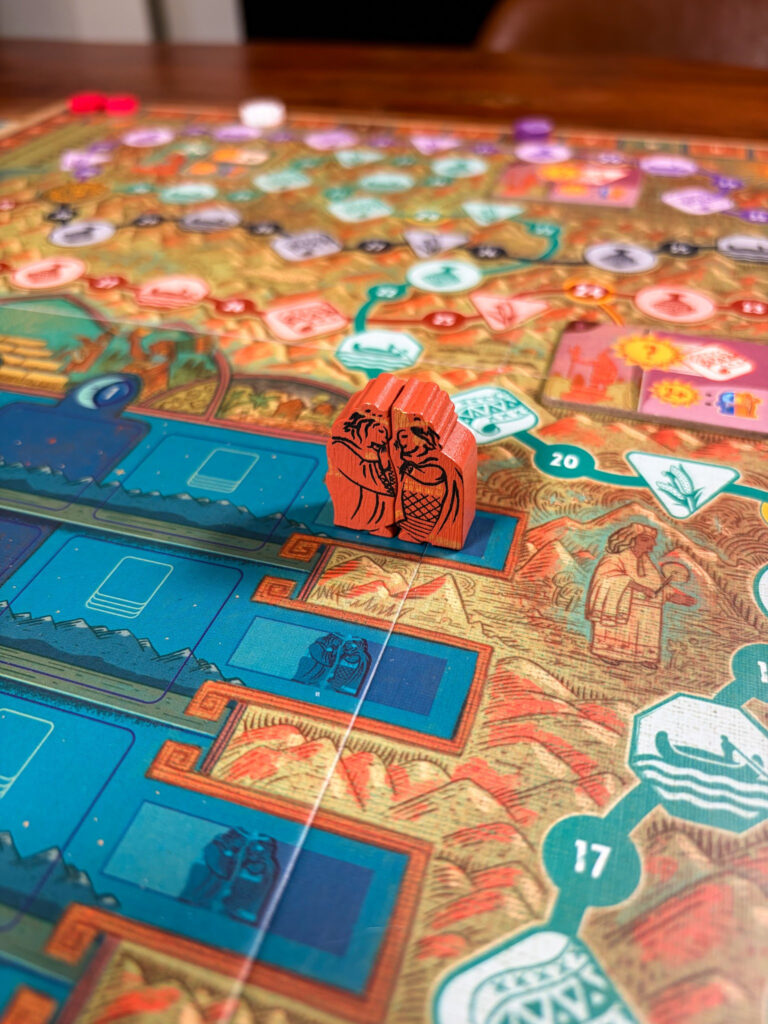
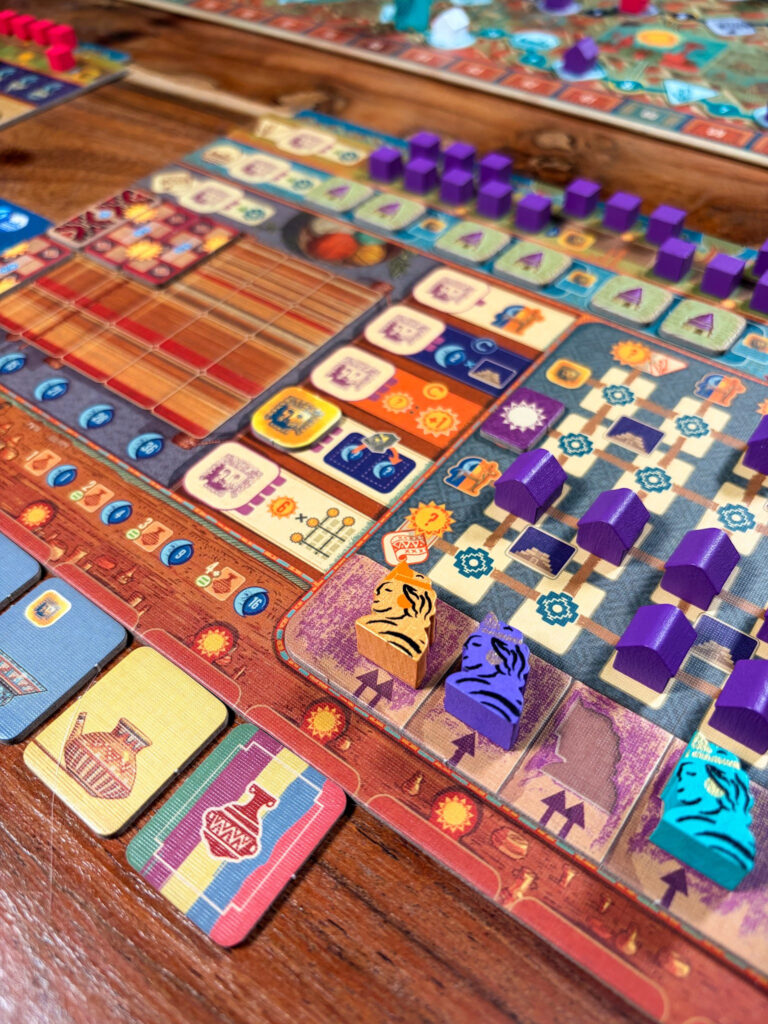
The scoring system is another highlight. Players must balance two separate scoring tracks, with the final score determined by the marker that lags behind. This clever mechanism encourages careful planning rather than single-track optimization. With four main activities offering different strategic paths, the game provides strong replayability, further enhanced by an excellent solo mode.
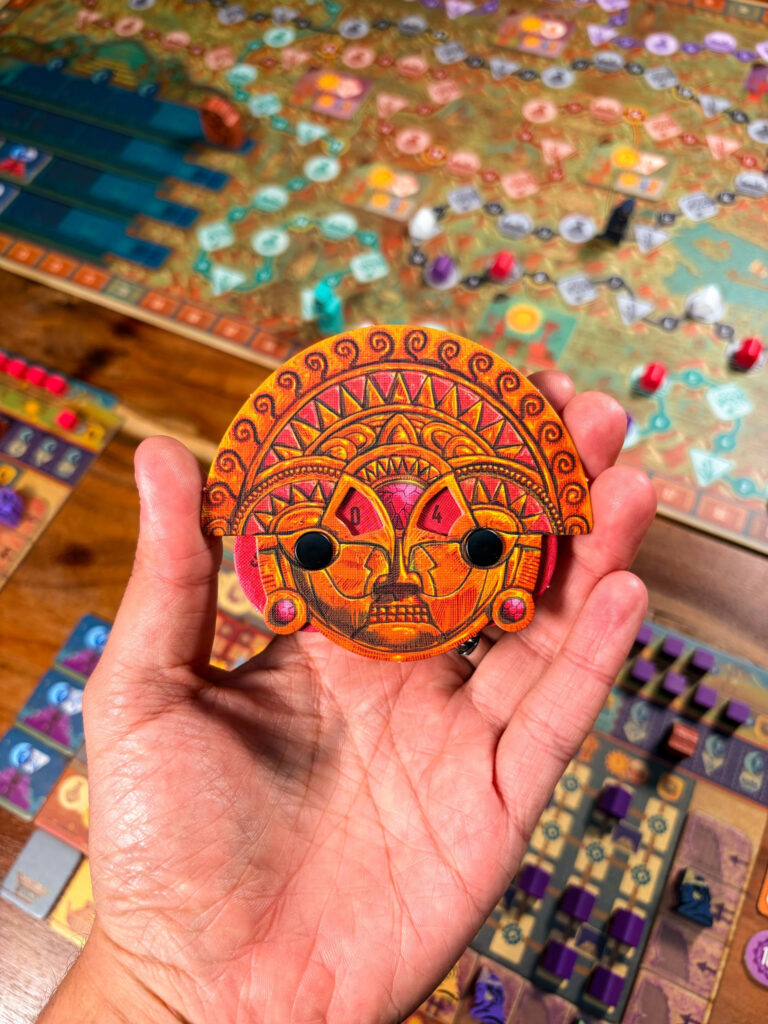
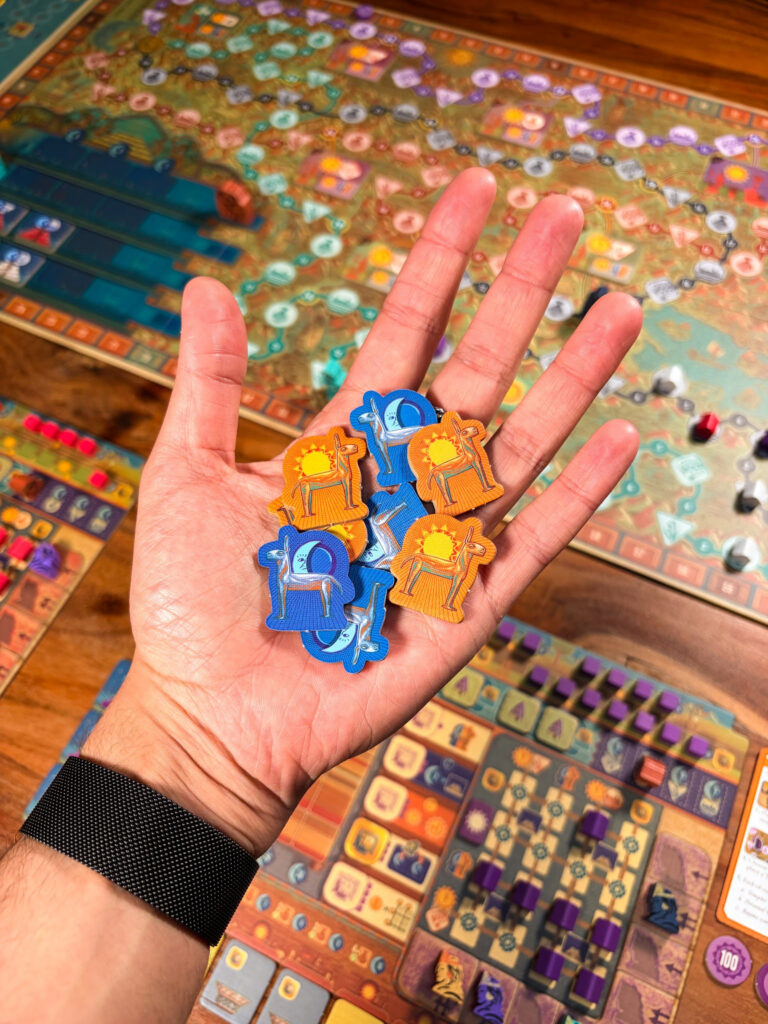
The only real drawback is the lengthy setup, as each player board contains numerous components that need to be arranged before play begins. Aside from that, this is a beautifully designed game that plays well at both low and high player counts while delivering a rich thematic experience.