


Sabika review
4 september 2026 · Bijgewerkt 4 september 2026
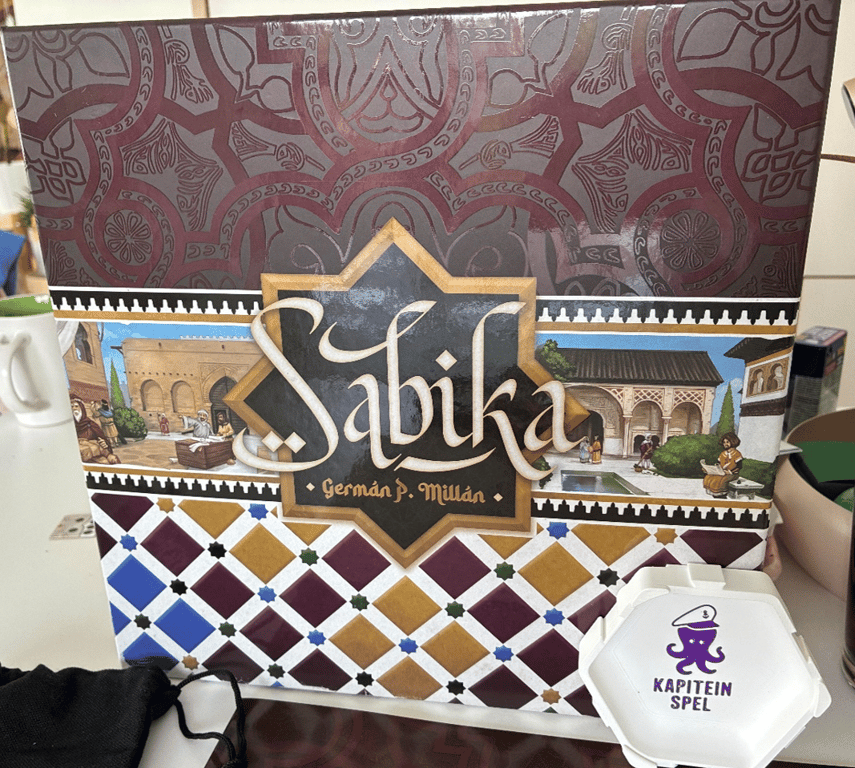
Ludonova | 1 to 4 players | 14+ | 60-120 minutes
Sabika is set in Granada during the Nasrid dynasty. You lead a group of nobles helping to build and decorate the Alhambra. You trade materials, expand the palace and decorate it with poetry. Along the way, you earn prestige points. At the end of each round, you also pay for protection from the Catholics. Naturally, your goal is to finish the game with the most prestige.
Gameplay
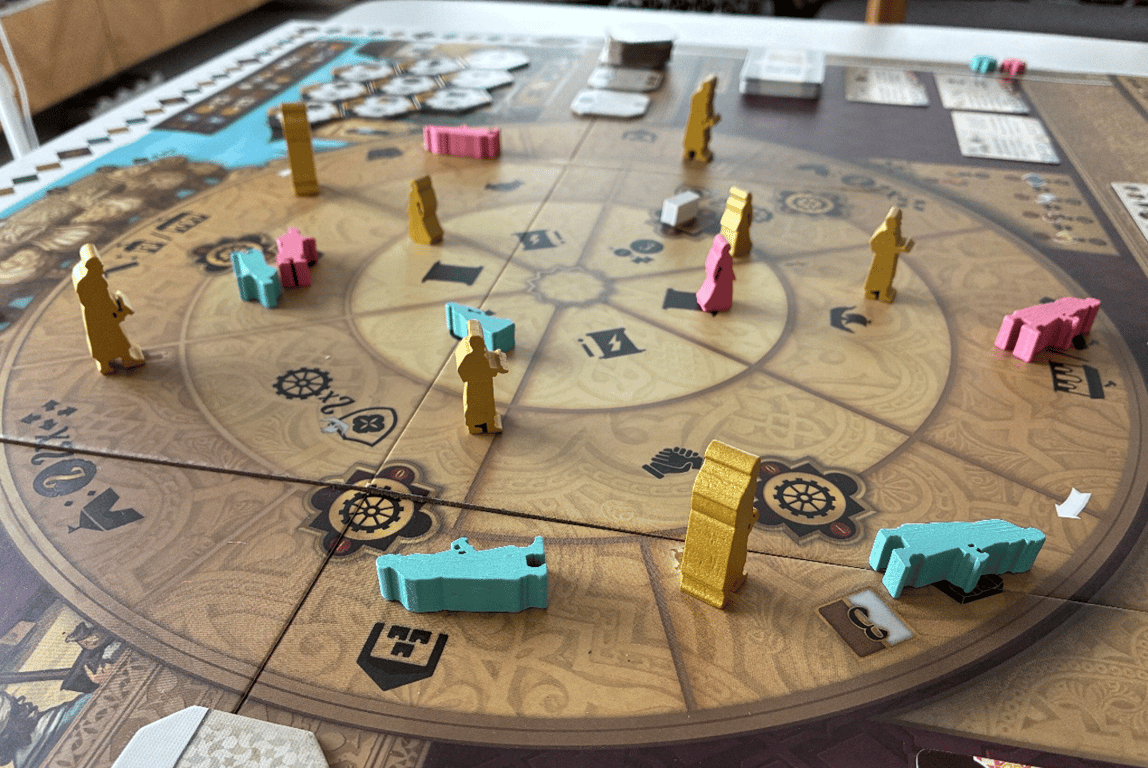
At the start of each round, you put your meeples to work on a rondel made up of three separate tracks. During your turn, you move one chosen meeple up to two spaces forward on its track. You then perform the action of the space where it ends.
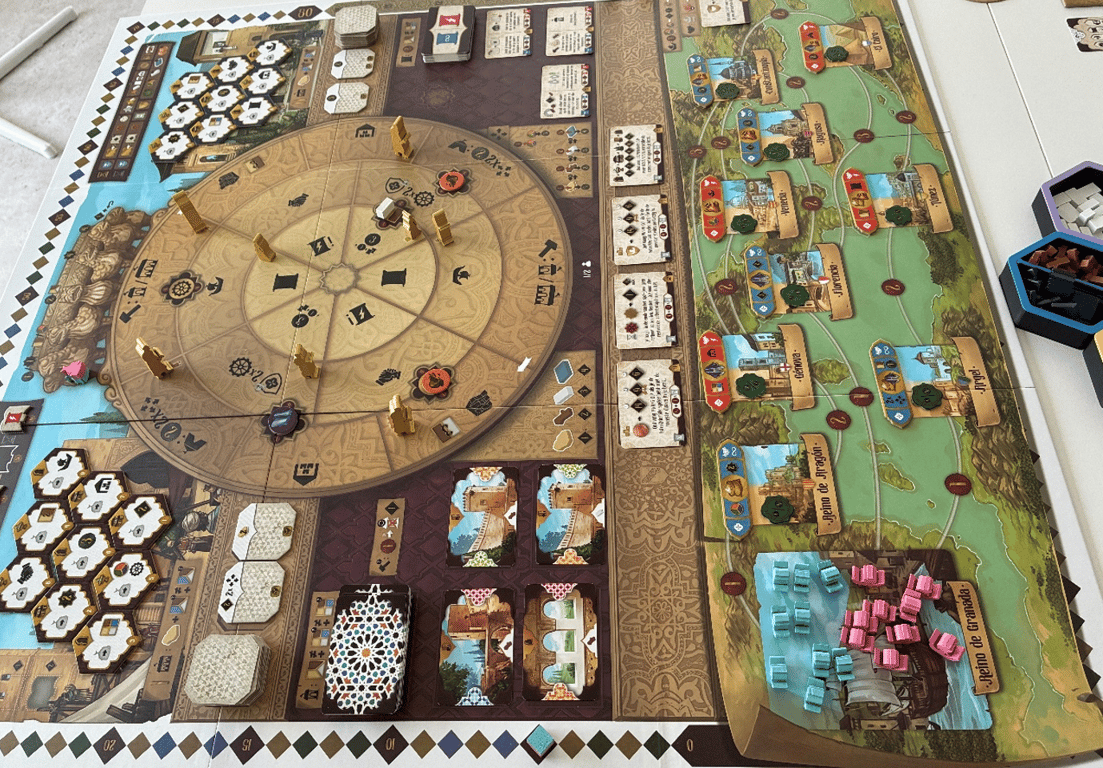
The rondel is one of the most interesting parts of Sabika. You cannot simply choose any action whenever it suits you. You need to plan ahead, while also keeping a close eye on what your opponents are likely to do. Sometimes you want to keep an action cheap for yourself, while at other times it can be worthwhile to occupy a space and make that action more expensive for someone else.
You are not only thinking about your current turn either. Where your meeple ends up also affects the options you will have in a future round. That means you are constantly planning ahead, anticipating moves and trying to read the other players. It creates plenty of interaction and keeps you paying attention during other players' turns. As a result, the downtime feels surprisingly low.
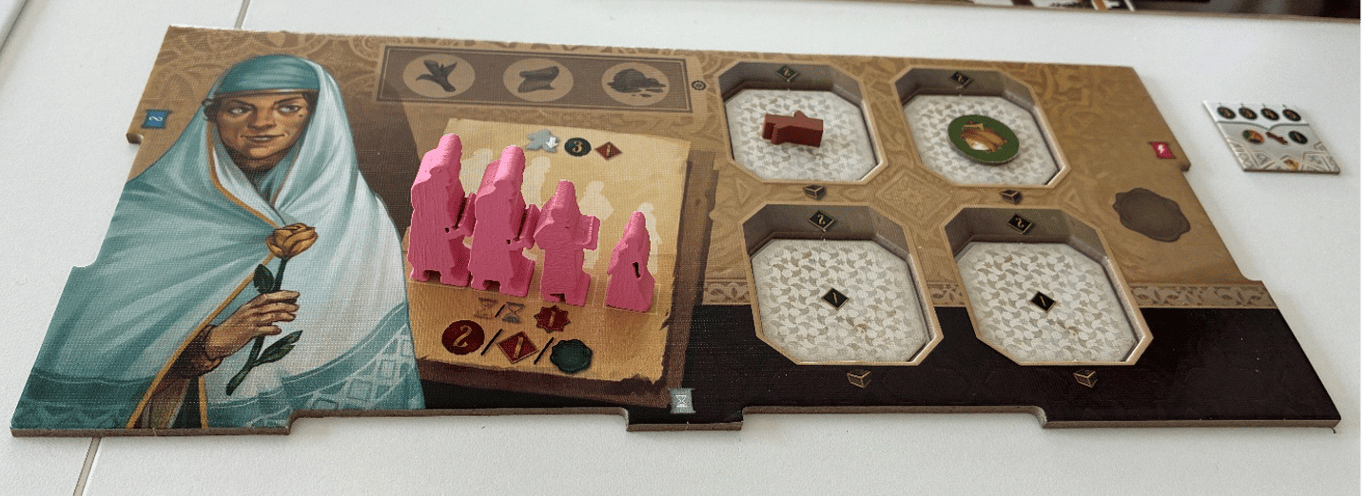
After performing your action, you lay the used meeple down. Once everyone has used all four of their meeples, the round ends. Prestige points are awarded, protection is paid and everyone receives income. Then the next round begins. The game lasts for five rounds in total.
Our impression
Sabika plays surprisingly smoothly for such a heavy expert game. There are many different ways to score points and you almost always have several interesting options. At the same time, you cannot focus only on your own plans. The choices made by other players directly affect the costs and possibilities on the rondel.
That regularly creates some difficult decisions. Do you take the action you really need, even though it has become more expensive? Or do you change your plan and try to put yourself in a better position for the next round? It is exactly this combination of tactical decisions and long-term planning that makes Sabika so interesting.
The adjusted board for 1-2 and 3-4 players helps the game adapt to different player counts. This keeps space on the rondel limited and makes sure there is still competition for the most useful actions.
There is a downside though: Sabika takes quite a bit of explaining. Setup also takes some time. There are many actions and the iconography is extensive, so during your first game it is not always immediately clear what all your options are. You should expect to check the rulebook or reference guide regularly while learning the game.
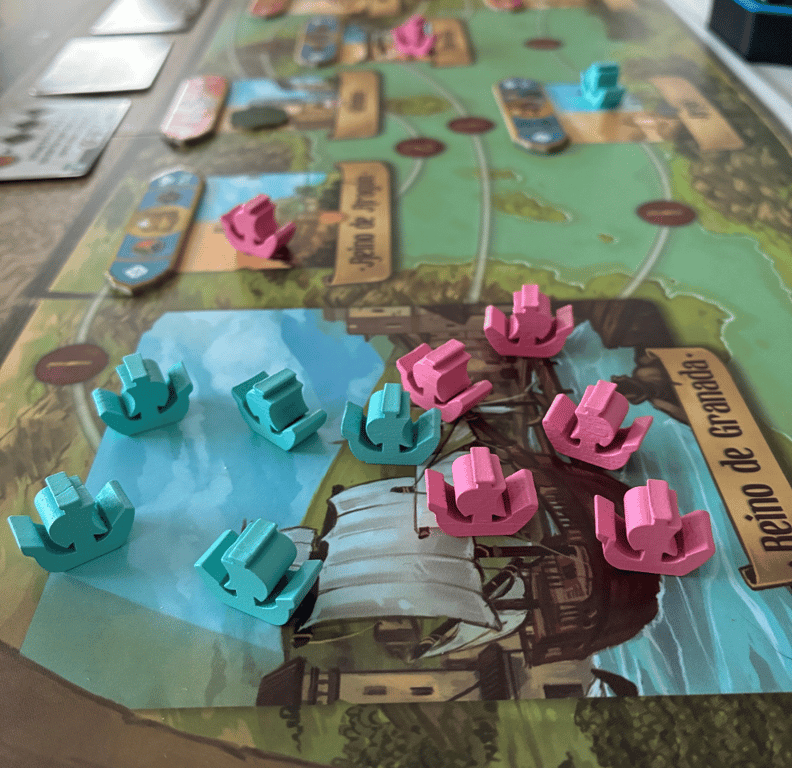
That investment does pay off. Once everyone understands the game better, turns move quickly and there is very little downtime. Our game took around 2 to 2.5 hours, but it felt surprisingly short. The beautiful illustrations and the quality of the components also add a lot to the overall experience.
If you are looking for a heavy eurogame that asks you to plan ahead, constantly keep an eye on the other players and make difficult decisions every round, Sabika is definitely worth a look. The three-track rondel in particular, and the way your current choices shape your options in future rounds, give the game a strong identity of its own.