


Ayar: Children of the Sun review
13 oktober 2026
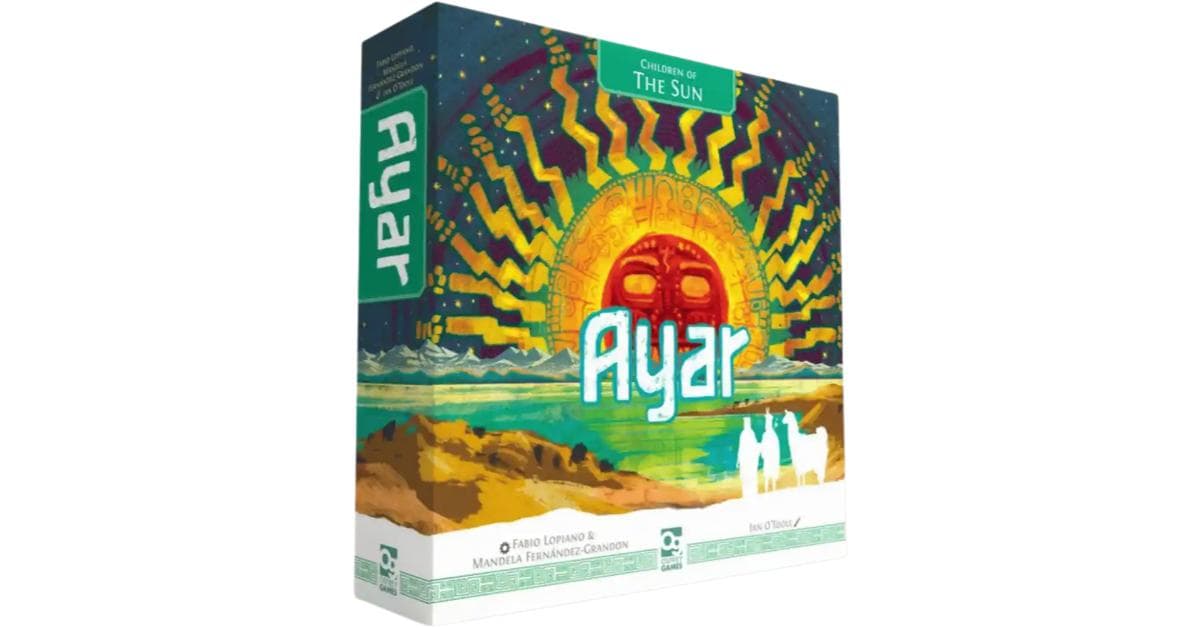
Ayar: Children of the Sun review
Osprey Games | 1 to 4 players | 14+ | 60 to 90 minutes
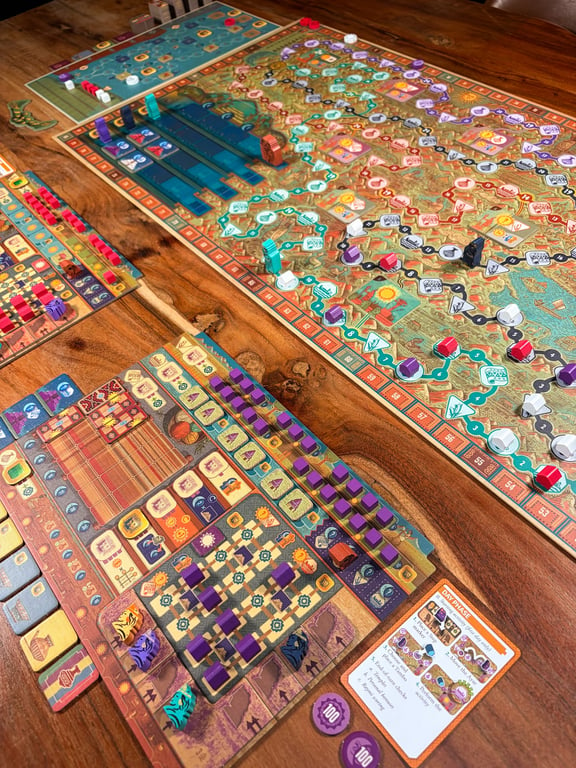
In this medium-weight Euro game, published by Osprey Games, players dive into the origin myth of the Inca. Each player represents one of the first clans of Tawantinsuyu, travelling alongside the Ayar brothers and sisters. They have been sent by Inti, the sun god, and Mama Quilla, the moon goddess. On this journey, players follow their teachings and develop skills in farming, pottery, weaving and reed bundling.
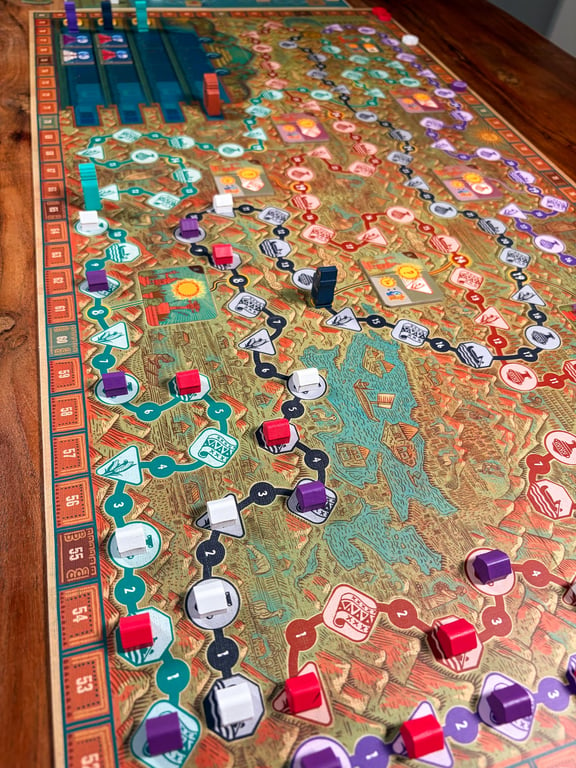
After setting up the central board and the personal player boards, the game is played over four rounds. Each round consists of a day phase and a night phase. During the day phase, players take turns placing one of their remaining step markers in an empty space next to their tambo grid. They then move the matching Ayar along the path of the same colour. Next, they choose a tambo, place it in an empty building space behind the Ayar they just moved and carry out the matching action.
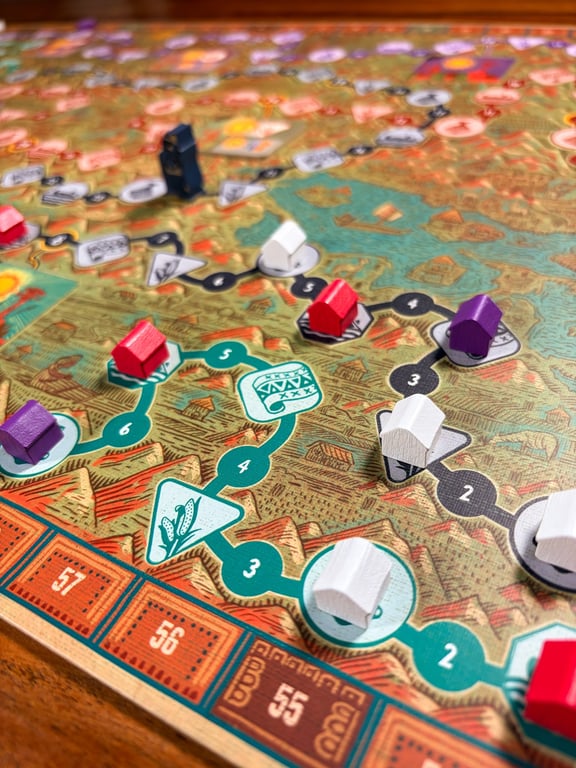
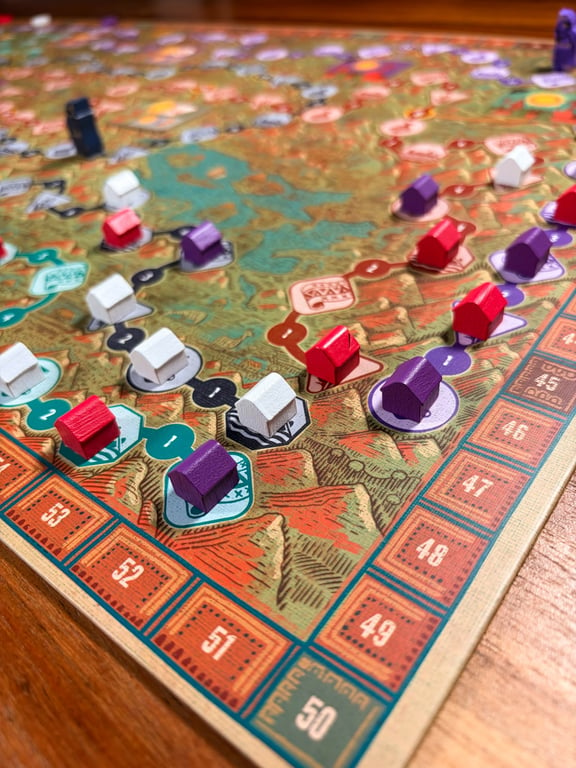
With pottery, players collect pots from the lake board. Weaving produces textiles, which are added to the weaving area on their player board. Terrace farming lets players place maize in their farming area. With reed bundling, players move their boat along the paths on the lake, placing islands as they go. These activities reveal suns that add to the Inti devotion score and open up better ways to score points with the moon.
At the end of a turn, players check whether they meet the conditions to place temples on designated spaces on the central board. These temples earn extra moon points when an Ayar withdraws. Players also receive personal bonuses for clearing rows or columns, and earn Inti devotion when Ayars reach Raymi tiles.
Once all step markers have been placed, the game moves on to the night phase. The Ayar who has travelled the shortest distance withdraws, maize is harvested and the Ayar couple is reunited. This lets players score previously placed temples for extra moon points. Players then score their matching step marker, receive sun points based on their Inti disc and prepare for the next round. After four rounds, players assign the llamas they have collected to their sun and moon markers to optimise their final score. The winner is the player whose lowest-scoring marker is higher than everyone else's.
Impressions
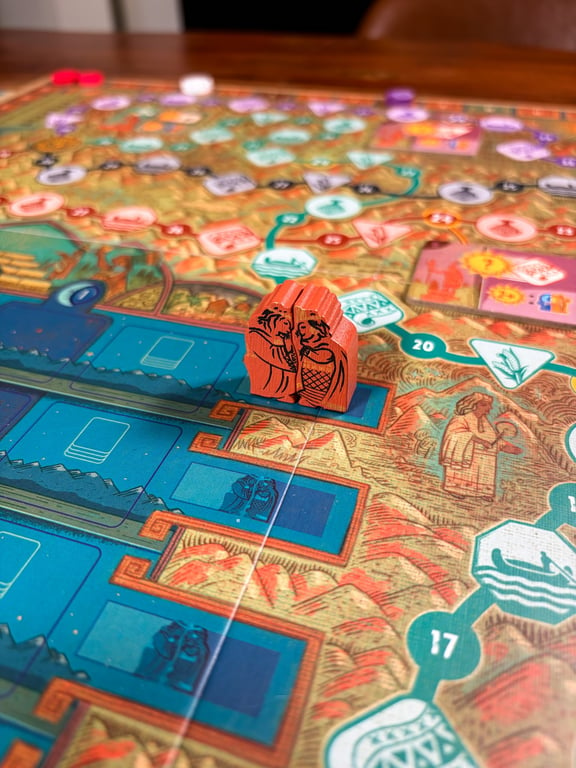
Because this game is part of a trilogy, my expectations were high. The game lived up to them. The part that impressed me most was the theme. The story strongly supports the gameplay and draws players into the game with beautifully designed components and activities that feel truly connected to the setting. Many Euro games include thematic elements, but here the story feels genuinely integrated and develops naturally as the game progresses.
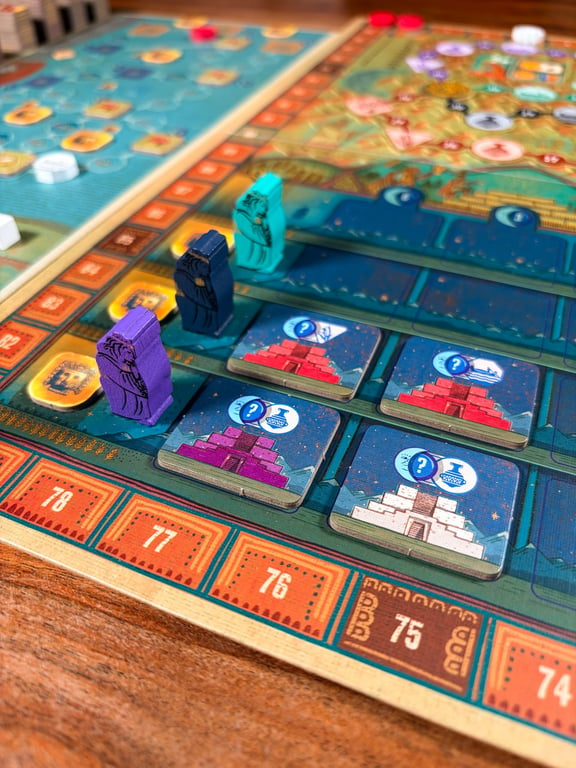
Another aspect I appreciate is the absence of cards, apart from the player aids. Cards are common in Euro games and usually work perfectly well, but because this game relies on sturdy components, it creates a refreshing, tactile experience.
Although the game clearly falls into the medium-weight category and takes some time to learn, I found it less overwhelming than comparable titles. That is mainly down to the clear iconography and the logical structure. The rulebook is particularly strong, offering useful examples without becoming needlessly complicated.
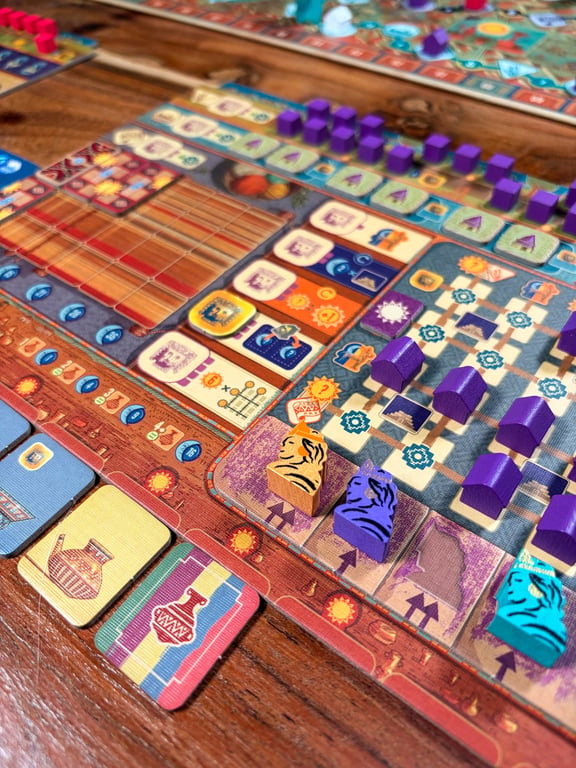
The scoring system is another strong point. Players have to keep two separate score tracks in balance, with the final score determined by the marker that lags behind. This strong mechanism encourages careful planning rather than optimising a single track. With four main activities that offer different strategic routes, the game has plenty of replayability. The excellent solo mode adds even more.
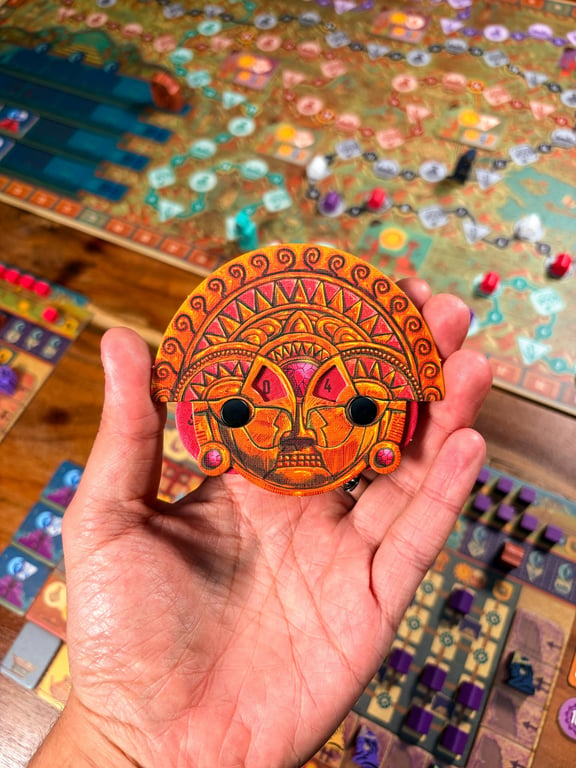
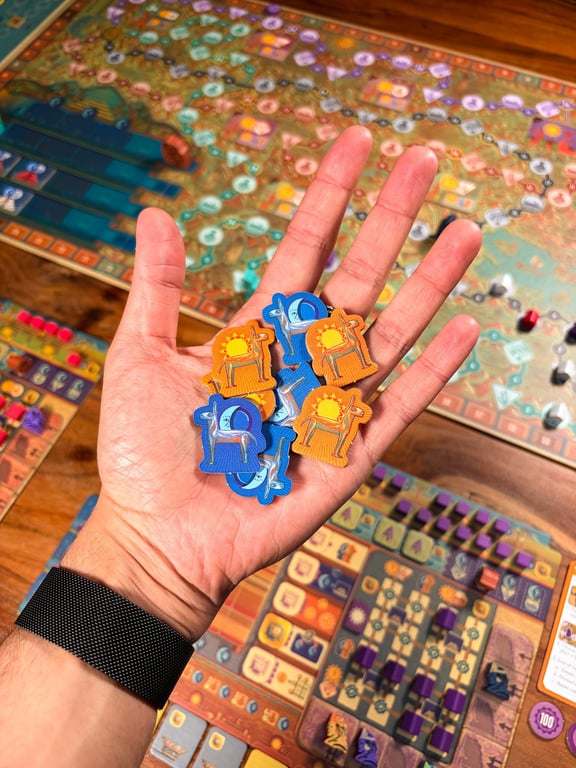
The only real drawback is the long setup. Each player board has lots of components that need to be laid out before you can play. Apart from that, this is a beautifully designed game that works well with both few and many players, while offering a rich thematic experience.